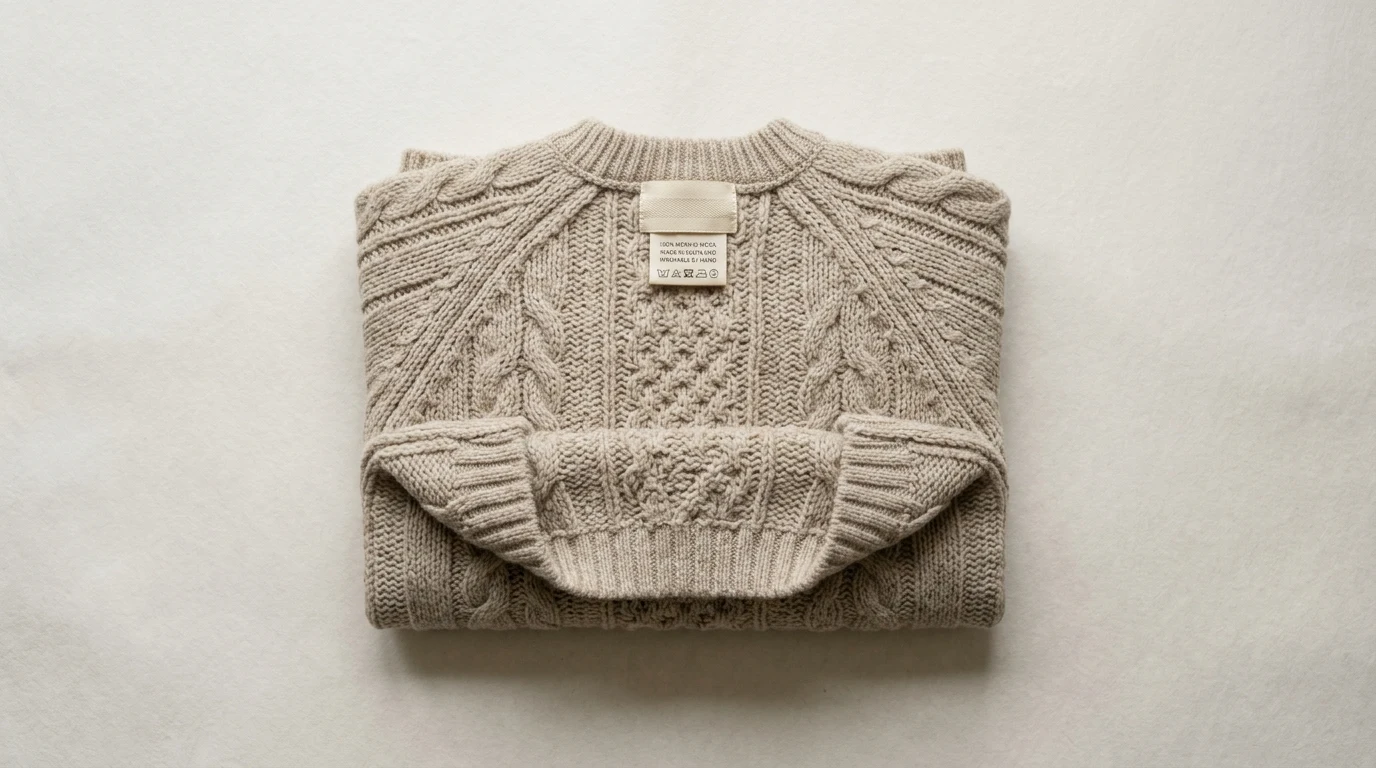
A furniture label is a short document doing long work. It tells a shopper where a chair's timber came from, what is in the foam beneath the fabric, and whether the finish off-gasses into the room. Reading it well means separating claims a certification body has checked from claims a brand has simply written.
The most useful marks for a typical purchase are few. FSC relates to wood, GREENGUARD to chemical emissions, and OEKO-TEX to textiles. Everything else on a hangtag is usually either a company standard, a marketing phrase, or a description of the law the product must meet anyway. To read a label, in the dictionary sense, is to examine and grasp its meaning — The Free Dictionary defines reading as examining and grasping the meaning of written material, which is precisely the discipline a hangtag asks of its reader.
What do the main certifications actually verify?
Each mark answers one narrow question, and knowing the question is most of the battle.
- FSC (Forest Stewardship Council) concerns the wood. It verifies that timber in the product traces to forests managed against the council's standards, which cover harvesting practices and chain-of-custody tracking from forest to factory. A full FSC claim on a dining table speaks to the wood alone — not the glue, the finish, or the cushion.
- GREENGUARD concerns the air. It is an emissions certification: the product has been tested for chemical output, the kind of volatile organic compounds that a new sofa or cabinet can release into a room. It says nothing about where the materials came from, only what they give off once installed.
- OEKO-TEX concerns the textile. Its best-known label tests fabric for a list of harmful substances — certain dyes, formaldehyde, heavy metals — at the level of the material itself. A certified slipcover or upholstered textile has passed that testing; the frame beneath it has not.
Read together, the three marks cover a product's wood, air, and cloth. Read alone, each one covers only its own slice. A sofa with one certification is not a certified sofa; it is a sofa with one certified component or attribute.
Which claims on a label are not certifications?
The softest words on a label are the ones with no third party behind them. "Natural," "eco-friendly," "non-toxic," and "green" are, in general use, marketing descriptors rather than verified claims — no independent body checks them in the way it checks an FSC chain of custody. "Sustainable" behaves the same way unless a named certification sits beside it.
Some phrases describe compliance rather than virtue. A statement that a product meets legal requirements for flammability or formaldehyde in furniture describes what the law already demands of goods sold in that market. It is true and worth having, but it is not a distinction among products — every compliant sofa in the shop meets it too.
Company-owned labels are the third category. A brand's own "responsible sourcing promise" or in-house eco-line is a statement the brand makes about itself. It may be sincere. It is not verified by anyone outside the company, and a careful reader treats it accordingly.
Which certifications matter for which purchase?
Match the mark to the material, and the label becomes easy to use.
| Purchase | Label to look for | What it tells the shopper |
|---|---|---|
| Solid-wood table, bed, shelving | FSC | The timber traces to certified managed forests |
| Sofa, mattress, nursery furniture | GREENGUARD | Tested for chemical emissions into indoor air |
| Upholstery, curtains, bedding | OEKO-TEX | Textile tested for harmful substances |
| Anything at all | "Eco," "natural," "green" alone | Marketing language; no third-party verification |
Nursery furniture is the case where emissions labels earn their place most clearly: a crib sits close to a sleeping child for hours at a stretch, so a tested low-emission finish is a reasonable priority there. For a solid oak sideboard, the wood's origin is the more meaningful claim. For a linen curtain, the textile standard is the one that applies.
What this means in practice: a shopper rarely needs every mark on every piece. One well-matched certification, honestly displayed, tells more than a hangtag crowded with adjectives.
How should a shopper verify a claim before buying?
Three habits turn a label from decoration into information.
- Look for the certifier's name, not just the adjective. A genuine certification names the body behind it — FSC, GREENGUARD, OEKO-TEX — usually with a license or certificate reference. An unattributed adjective is not a standard.
- Check the scope. Certification applies to what was tested: a textile, a finish, a timber lot. If the hangtag implies the whole product is certified when only one part is, the wording will usually betray it — "upholstered with OEKO-TEX certified fabric" is a narrower claim than it first appears.
- Ask the seller to point to the documentation. Brands that hold these certifications can generally produce the certificate or a listing. Hesitation is itself information.
None of this requires expertise, only the patience to read the small print before the large one.
Why labels have become part of the furniture story
Furniture shopping has changed shape in recent years, and the label has moved with it. Sourcing shifts, tariff changes, and supply chains rerouted across continents have made the origin of a piece a live question rather than an assumed one, as The Decor Artist covered in its report on tariff changes and sourcing shifts reshaping furniture shopping. When the route from forest to showroom grows longer, the paperwork that traces it grows more valuable. Readers following this should also see Tariff Changes and Sourcing Shifts Reshape Furniture Shopping in June 2026.
The same curiosity runs through the wider design calendar. Textile houses now treat fabric with architectural seriousness, as in Kvadrat's THREE curtains and Copenhagen's rug debuts, and affordable lines make a point of their materials story, as with IKEA PS 2026's return after a decade. A reader following decor news will notice that materials claims now appear in launch announcements as often as silhouettes do — which is exactly why knowing what a certification verifies has become a core furnishing skill. We covered a connected angle in Why Kvadrat's THREE Curtains and Copenhagen's Rug Debuts Treat Textiles as Architecture.
The takeaway: read the label like a maker would
The evidence a label offers is narrow but real. FSC speaks to wood, GREENGUARD to emissions, OEKO-TEX to textiles, and each is only as broad as the component it tested. Unattributed adjectives verify nothing, and compliance statements describe the law rather than the brand's care. What remains unknown is the part no hangtag settles: how a piece will wear in a particular room, under a particular life. The label narrows the questions worth asking in the showroom; it does not answer them. A shopper who reads the small print first arrives knowing which claims are checked, which are cheerful, and which are worth paying for.