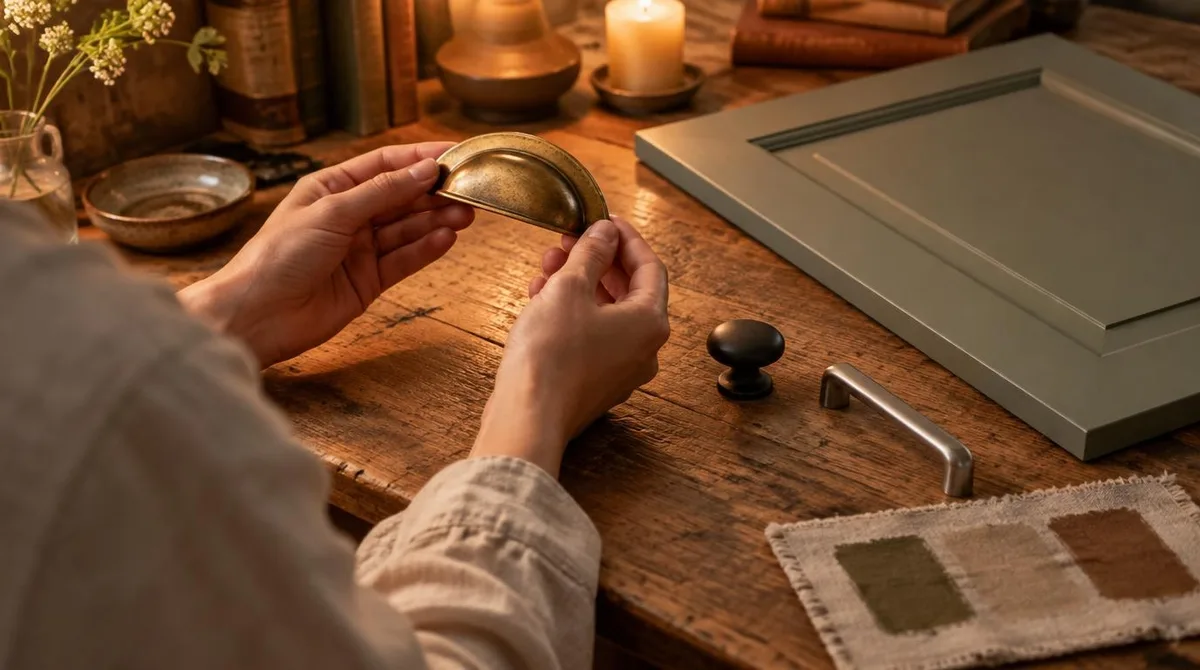
Brass, black, and brushed nickel each age differently, and the right choice depends less on fashion than on how a finish wears. Brass develops a warm patina over years of handling. Black and brushed nickel hold their color more quietly, hiding fingerprints and small scratches in daily use.
The decision also shapes how a room reads as a whole. Hardware is the smallest metal in the space, but it sits at hand height, next to faucets, lamps, and frames. Choosing a finish that coordinates with those neighbors, rather than fights them, is what makes a scheme look settled rather than assembled.
What separates the three finishes?
Brass is the oldest of the three and the most complex. According to Wikipedia, brass is an alloy of copper and zinc, and it "has long been popular for its bright, golden appearance and used for cabinetry and furniture fittings such as drawer pulls, hinges, and doorknobs." The proportions of copper and zinc can be varied to shift both the color and the hardness: more copper makes the metal softer and more golden, while more zinc makes it harder and more silvery.
Black hardware is typically a plated or powder-coated surface over a base metal, which is why its character is matte and even rather than reflective. Brushed nickel takes the opposite route: the surface is abraded to a soft, linear sheen that diffuses light instead of mirroring it. In practical terms, brass brings warmth and shine, black brings graphic contrast, and brushed nickel brings a cool, low-glare neutrality that recedes into most palettes.
How does brass age, exactly?
Brass is the finish with the most documented life story. The same Wikipedia entry notes that brass corrodes in the presence of moisture, chlorides, acetates, ammonia, and certain acids, and that copper in the alloy reacts with sulfur to form a brown surface layer that can eventually darken to black. In damp, slightly acidic conditions, that layer can oxidize further into a green-blue copper carbonate patina — the verdigris familiar from old door fittings and garden ornaments.
Notably, the encyclopedia adds that a patina layer, depending on how it forms, may protect the underlying brass from further damage. That is the case for living-finish hardware: the surface change is the material's own weatherproofing, not a defect. Readers who prefer a bright, polished look should expect to maintain it; readers who accept the darkening get hardware that tells the building's history on its own surface.
There is also a recycling argument in brass's favor. Nearly 90 percent of all brass alloys are recycled today, according to Simple English Wikipedia, because the metal is not ferromagnetic and can be separated from scrap with a magnet, then melted and recast. For readers weighing material choices, that is a durable fact worth knowing.
What this means for mixing metals in one room
Mixing finishes works when one metal leads and the others support. A common approach: let the plumbing fixtures set the tone, then echo that metal in hardware at least twice — cabinet pulls and a door lever, say — so the second finish reads as intentional rather than accidental. A third metal can appear once, in a small dose like a picture light or a lamp base, as an accent.
Brass pairs naturally with warm woods, plaster, and earth-toned textiles. Brushed nickel suits cooler palettes: grays, blues, marble, and pale oak. Black is the strongest contrast of the three and asks for company — black window frames, a black light fixture, or dark stone — or it can look isolated on a pale cabinet run. For related coverage, see Why Kvadrat's THREE Curtains and Copenhagen's Rug Debuts Treat Textiles as Architecture.
One caution comes straight from the material itself. Because brass sits lower on the galvanic scale than metals such as silver, it will corrode when in direct contact with a more noble metal in a corrosive environment, while a less noble metal such as zinc or iron will corrode against it. In ordinary interiors this rarely matters, but in damp rooms — bathrooms especially — it is sensible to keep dissimilar metals from touching where water collects, or to choose hardware from a single family throughout the wet zone.
How should each finish be cared for?
Care follows from chemistry. Since brass reacts to ammonia and to chlorides, the general principle documented in the Wikipedia entry suggests keeping harsh ammonia-based cleaners and salty, damp conditions away from unprotected brass, and letting a sealed or lacquered finish do the work where a bright look must be preserved. Unlacquered brass is the low-maintenance choice only in the sense that it asks nothing of its owner — it darkens on its own schedule.
Black and brushed nickel finishes are, in general terms, more forgiving of daily handling. Their concern is the coating rather than the alloy: abrasive scouring can wear through a plated surface, and a scratched coating cannot be buffed back the way brass can be repolished. A soft cloth and a mild, diluted detergent are the safe default for any of the three; anything stronger, or any repair involving the base metal, belongs with the hardware maker's own published care instructions rather than a household improvisation.
Readers replacing hardware on existing pieces may also find it useful to check what a piece is actually made of before choosing a finish. The publication's guide to reading furniture labels and materials claims covers how to decode exactly those descriptions. This connects to our earlier piece, How to Read a Furniture Label: Certifications and Materials Claims Explained.
Which finish belongs in which room?
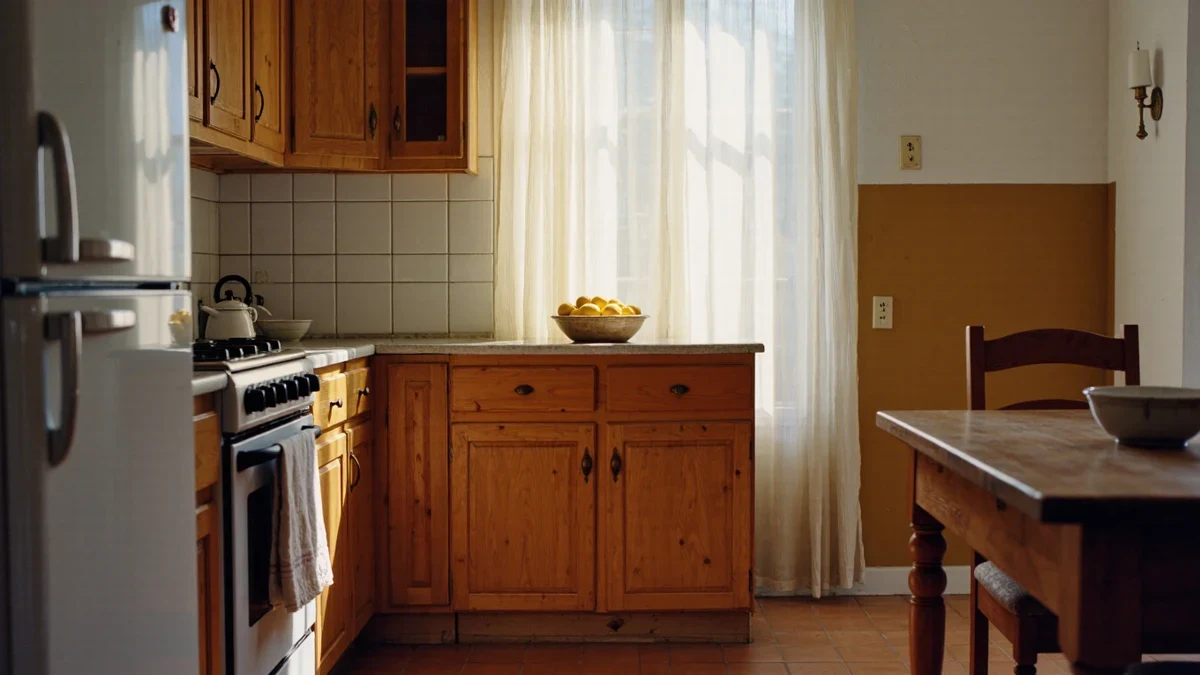
Kitchens tolerate all three, but the deciding factor is usually the faucet. A brass faucet wants brass or warm-toned hardware nearby; a stainless faucet pulls the room toward brushed nickel. In a kitchen with painted cabinets in a saturated color, black hardware gives the strongest, most graphic read.
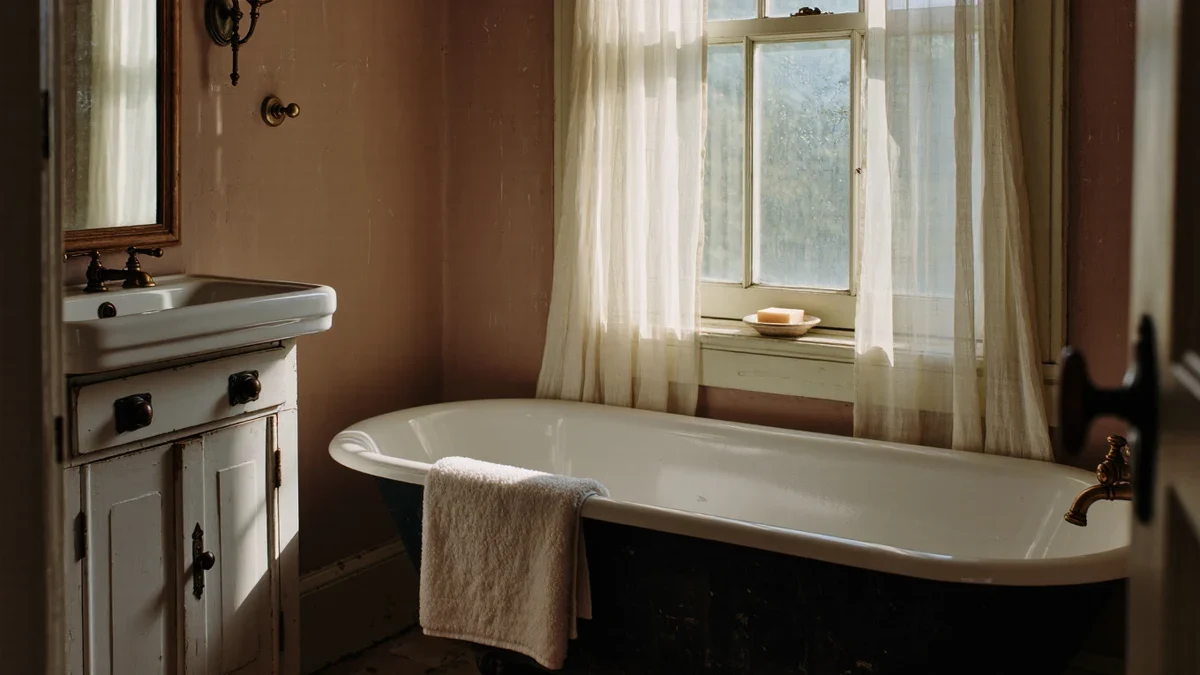
Bathrooms favor finishes that shrug off moisture. Brushed nickel and coated black hardware are the conventional choices here, and if brass is used, a sealed finish or a willingness to accept patina should come with it. Bedrooms and living spaces are where unlacquered brass earns its keep: drawer pulls, picture lights, and furniture fittings that darken slowly and suit textiles, timber, and lamplight.
Furniture hardware deserves the same thinking as architectural hardware. A vintage case piece with original brass fittings is often best served by matching that alloy rather than introducing a cooler metal, a principle that applies across the furniture coverage the magazine publishes, from heritage restoration to new launches.
The takeaway for readers choosing today
The evidence points to a simple hierarchy of decision. First, match the finish to the wettest room it will live in, since moisture and chlorides are what brass cannot shrug off unaided. Second, decide whether the patina is a feature or a problem; brass is the only one of the three whose aging is part of its appeal, and it is also the most recyclable of the common hardware metals. Third, treat metal mixing as a hierarchy — one lead finish, one support, one accent — and let the faucets and the largest metal objects set the order.
What remains unknown is a matter of taste rather than fact. No source can settle whether a black pull on sage-green cabinetry reads better than a brass one; that judgment belongs to the room, its light, and its owner. What the materials record does establish is how each choice will look in ten years — and that is the question worth answering before the first cabinet door is drilled.