Outdoor furniture rests on three material families, each documented in the maker Gloster's published care guides: teak, needing no special maintenance and weathering golden-brown to silvery grey in six months to two years; powder-coated aluminium, oven-cured at roughly 200 degrees Celsius; and sling, a PVC-coated polyester fabric the brand sources exclusively as Ferrari Batyline.
Why does teak turn silver-grey?
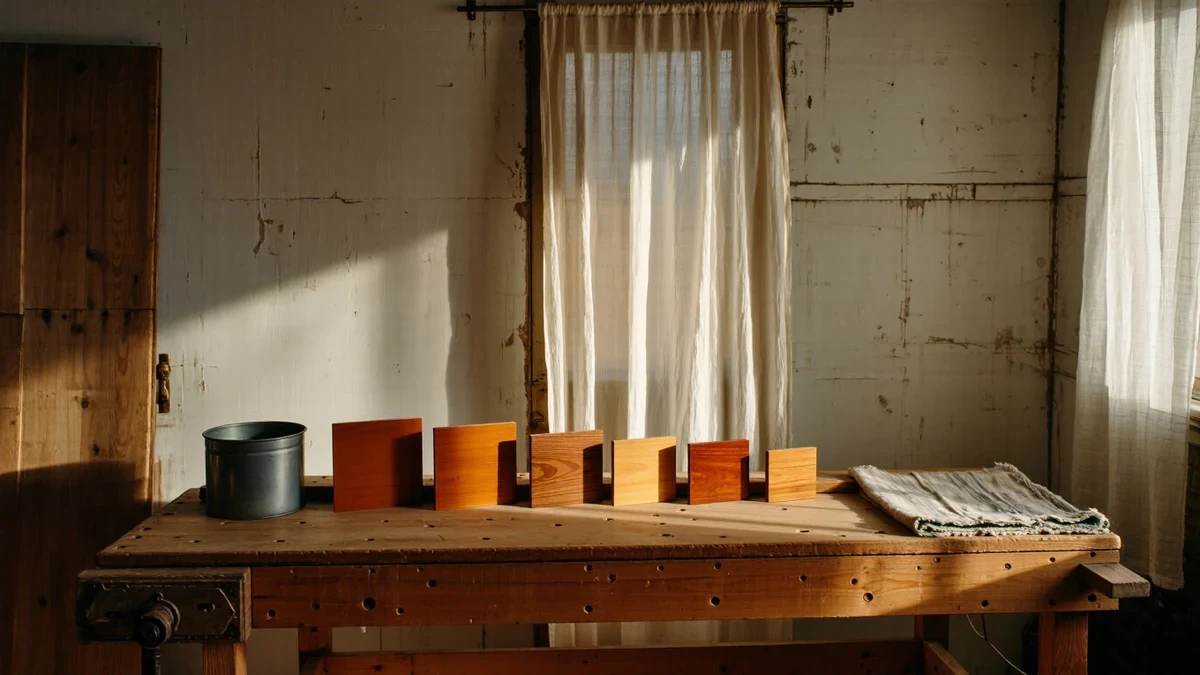
Because the pigments in the surface layer of the wood fade in the sun, and nothing is wrong when they do. Gloster's teak care guide states that left to weather naturally, teak will turn from a golden-brown colour to a light silvery grey as those surface pigments fade, a process taking from six months to two years depending on location and elements. The brand is explicit that it applies no finishes to its teak at all; some pieces are sanded to a fine 220-grit finish, others buffed so the wood's natural oils rise to a soft gloss, and the company notes the buffed look is cosmetic and disappears with rain, sun, or washing.
The silver patina is weathering, not decay, and the distinction matters to anyone choosing between the two teak philosophies: let it go grey and clean it once or twice a year, or intervene with protectors and sealers to hold the golden color, a choice other teak brands including Kingsley Bate document with their own care products. Neither path affects the wood's structural oil content; both are aesthetics.
Where does good teak actually come from?
Plantations, mostly on Java. Gloster's Teak Story page explains that teak is indigenous to only four countries, Burma, Laos, Thailand, and India, and that natural teak forests have practically disappeared in all of them except Burma, while plantation teak now flourishes across Southeast Asia, Africa, and Latin America. The brand says it sources from the well-managed, state-owned Perum Perhutani plantations on East Java, with a team of graders traveling to more than thirty locations across Java to select logs with the fewest natural defects.
High natural oil content is what earns teak its outdoor reputation, letting it withstand extreme weather conditions, as the brand characterizes it, without finishes. For a buyer, the provenance claim to check is plantation sourcing; for a deck, the maintenance claim to believe is the modest one in the care guide, thorough cleaning once or twice a year with water and mild detergent or the brand's own cleaner.
What is powder-coated aluminium, and why is it everywhere?
It is aluminium dressed in an electro-statically applied polyester skin. Gloster's aluminium care guide describes the metal as light and tough with an excellent strength-to-weight ratio and corrosion resistance, then details the coating: the material is sanded, immersed in chemical baths to clean and degrease it, pre-treated with a chrome conversion coating, and finally sprayed with powder that is deposited electrostatically over the entire frame before the frame goes into an oven at approximately 200 degrees Celsius for fifteen to twenty minutes.
The payoff, per the same document, is a finish that is knock and scratch resistant, impervious to moisture, highly resistant to corrosion, and easy to clean, which is why so much contemporary outdoor framing, slim lounge chairs, dining bases, cantilevered parasols, is aluminium beneath the color. Care is correspondingly dull: mild soap and water, avoiding abrasives that would scratch the coating, an instruction the brand's product-care pages repeat across their material guides.
What is sling fabric?
A woven outdoor textile built for tension. Gloster's sling care guide defines the generic term: a fabric produced from PVC-coated polyester yarns, each yarn with a polyester core over which a colored PVC coating is extruded. For its sling furniture the brand uses exclusively Ferrari Batyline slings, which it credits with a patented pre-tensioning system that prevents sagging; its PVC, the guide adds, is impervious to UV, chlorine, salt, and most pollutants, and phthalate-free.
The material's honesty is its comfort: a sling chair is a stretched seat that drains instantly and dries fast, which is why it dominates poolside programs. Cleaning, per the guide, is occasional, with mild soap and water, and cushion covers come off the frames for storage rather than sitting through a winter in place.
How do the three materials compare for a real terrace?
Side by side, from the makers' own documents:
| Material | Documented behavior | Documented care |
|---|---|---|
| Teak | Weathers golden to silvery grey in 6 months to 2 years; natural oil content resists weather | Clean once or twice a year with mild detergent; optional light sanding; no finishes applied |
| Powder-coated aluminium | Light, corrosion-resistant frame; oven-cured polyester coat at ~200°C | Mild soap and water; no abrasives |
| Sling (PVC-coated polyester) | Pre-tensioned to resist sagging; UV, chlorine and salt resistant | Occasional cleaning with soap and water; store cushions off the frames |
Which material suits which kind of outdoor life?
Match the material to the weather and the willingness. Teak rewards owners who like a surface that changes, kitchen-table dining terraces where the wood's grey drift sits easily with linen and stoneware; it defeats owners who will resent the fading. Aluminium suits exposed, coastal, or rooftop settings where salt air and wind would test anything weaker, and its slim frames fit small balconies where visual weight matters as much as physical.
Sling belongs where water is the point, pools and splash zones, and mixes readily with aluminium framing in the same collections. Across all three, the makers' documents converge on one instruction set: mild soap, water, a soft cloth, covers for the off-season, and no abrasive cleaners anywhere. That unglamorous consensus is the real buyers' guide.
What does a no-finish policy mean for a new teak buyer?
It means the furniture arrives telling the truth. Gloster’s teak documentation is explicit that no finishes are applied at the factory: some pieces are sanded to a very fine finish, normally 220 grit, and others are buffed so the wood’s natural oils rise to a soft, slightly glossy sheen. The brand also cautions that buffing is a cosmetic process not meant to last, disappearing with rain, sun, or a wash, which protects new owners from mistaking the first fading for a defect.
The practical consequence is that a teak purchase is a commitment to change. The table that arrives golden will not be the table of two summers later, and the buyer who understands the six-month to two-year weathering window chooses teak for its trajectory, not its delivery-day photograph. Owners who want to hold the golden moment are the market for protectors and sealers, applied on a schedule those products’ own instructions set.
How should the first season with new teak be handled?
Gently, and mostly by leaving it alone. The care guide’s recommended routine for naturally weathering furniture is a thorough clean once or twice a year with water and mild detergent or the brand’s own cleaner, with the occasional light sanding available to lift surface marks. Anything beyond that, annual sealing, oiling debates, patina products, belongs to the preserve-the-color philosophy rather than the weathering one, and the two approaches should not be mixed on one piece.
Rain marks and water spotting in the first months are part of the transition rather than damage, and furniture covers used through that period will slow the change without stopping it. The honest owner’s calendar for teak is two cleans, one assessment, and a great deal of sitting.
Why do makers publish care documents at all?
Because outdoor furniture fails in the field, not the showroom, and the failures are almost always cleaning errors rather than material limits. Gloster’s product-care library runs to more than a dozen material guides, from acrylic stone to wicker, each built around the same skeleton: what the material is, what the maker did to it, and what the owner should and should not do to it. That structure is the buyer’s best tool, because a brand documenting its own finishes is also documenting exactly which promises the finish will keep.
Read that way, the care document is the real specification sheet. It tells a buyer that the aluminium frame was oven-cured and forgives soap and water, that the sling was pre-tensioned and resists chlorine, and that the teak was left bare on purpose. Any outdoor purchase, from any maker, deserves the same ten minutes with the care document before the credit card.