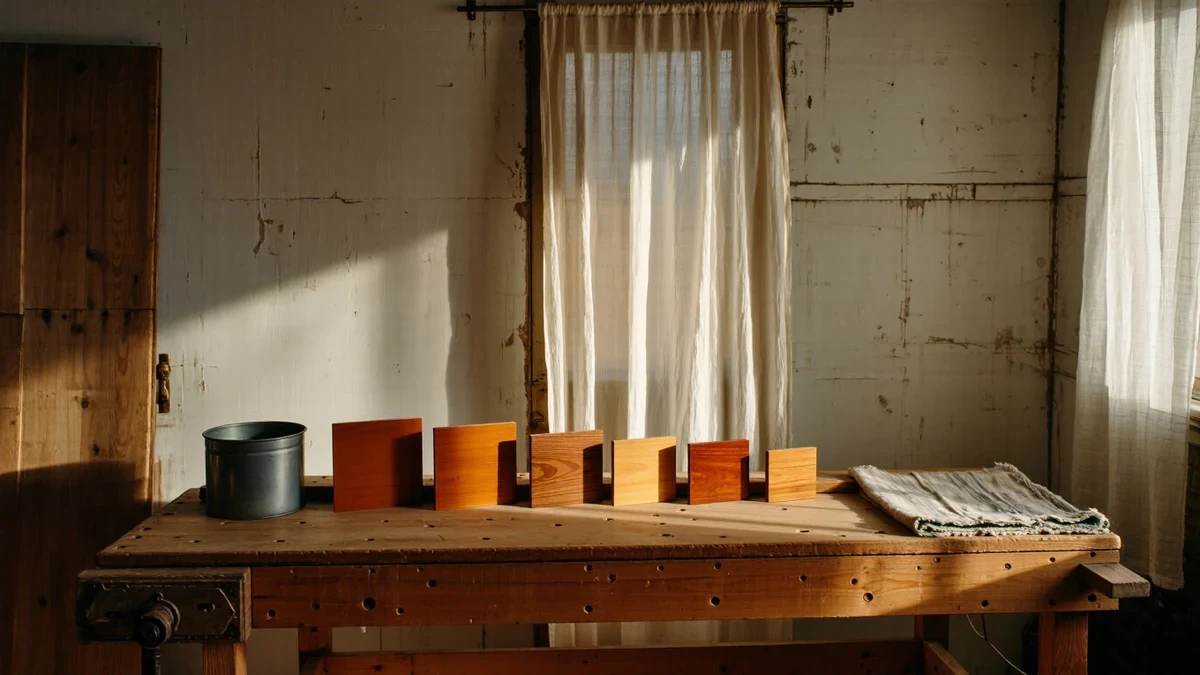
A wood finish is either a film that sits on the wood or an oil that soaks into it — that distinction explains almost every shelf choice. Coatings maker Target Coatings, in a guide published June 28, 2023, defines polyurethane "as a protective finish used to seal and protect wood surfaces from moisture, scratches, chemicals, stains, and everyday wear."
What are the main families of wood finish?
Four families cover most furniture work, and each protects differently. Penetrating oils — tung oil, linseed oil, and oil-varnish blends — soak in and harden; they are what a maker reaches for when the wood's texture should stay felt. Film finishes build a surface coat: polyurethane (oil- or water-based), lacquer, shellac, and wax each trade durability against appearance and effort.
| Finish family | How it protects | Documented traits |
|---|---|---|
| Penetrating oil (tung, linseed, blends) | Soaks in and hardens in the fibers | Low build, easy repair by re-oiling, closer-to-wood feel |
| Oil-based polyurethane | Surface film | "Adds a warm amber hue that deepens over time," per Target Coatings |
| Water-based polyurethane | Surface film | "Dries crystal clear and typically remains clear for years without yellowing" |
| Lacquer and shellac | Surface film | Fast-drying, fine furniture surfaces; traditional shellac is natural and repairable |
| Wax | Thin surface coat | Soft sheen, pleasant touch, needs periodic renewal |
How do oil-based and water-based polyurethane differ?
Color and drying behavior, mostly. Target Coatings' comparison states that "water based polyurethane dries crystal clear and typically remains clear for years without yellowing," while "oil based polyurethane adds a warm amber hue that deepens over time." On pale ash or maple, water-based keeps the wood honest; on walnut and cherry, the amber of an oil-based film reads as warmth. The same manufacturer's guide frames the whole category as protection "from moisture, scratches, chemicals, stains, and everyday wear" — the reason tabletops default to polyurethane.
What is an oil-varnish blend, and why do makers like it?
Between the two poles sits the finish most handmade furniture actually wears: a blend of oil and varnish, rubbed on like an oil but carrying enough resin to build a faint, protective sheen. It is the finish behind most "Danish oil" products and much of the mid-century reissue market, because it gives hand-rubbed warmth with meaningfully more water resistance than pure oil. The trade is honest: more convenience and repairability than a lacquer, less armor than polyurethane. Owners should treat a blend the way its oil half asks — coasters, prompt blotting, an occasional reapplication — rather than the way its varnish half promises.
Blends also explain a shelf-label confusion: "tung oil finish" on a can frequently means a wiping varnish with tung oil in it, not pure oil. Reading the manufacturer's datasheet, which reputable coatings makers publish, settles what is actually in the tin and what maintenance it expects.
How is polyurethane actually applied?
The Home Depot's published application video walks the standard sequence, and it is the same one professional finishers teach:
- Prepare the surface — sand through the grits until the wood is smooth and clean of dust.
- Apply the first coat evenly with a brush or applicator, working with the grain.
- Let it dry, then sand the surface lightly to knock down dust nibs.
- Repeat the coat-and-sand process for each additional coat.
The video, published on The Home Depot's channel in August 2020, notes that polyurethane "is used to coat surfaces, protecting them from scratches and helping to resist water damage" — the two hazards a dining table meets daily. Ventilation, patience between coats, and dry-sanding dust control do more for the result than any shortcut product.
How do the finishes compare on repair and upkeep?
Every finish fails eventually; the families differ in how gracefully. An oiled surface can be renewed in place — sand lightly, wipe on more oil — which is why makers of trestle tables and worktops favor it for pieces meant to be lived on. A polyurethane film is tougher but harder to patch: a deep scratch usually means refinishing the whole surface, because a spot-repaired film shows its edges. Shellac and lacquer, the traditional furniture-shop finishes, melt into themselves, so a skilled finisher can blend a repair invisibly — one reason they survive on fine cabinetry. Wax is the most forgiving and the most demanding: it marks easily and renews easily, suited to owners who enjoy the ritual.
Upkeep follows the same split. Films want dusting and protection from standing water at joints and edges, where moisture creeps under the coat. Oils want an occasional reapplication when water stops beading on the surface. Wax wants a buff between seasons. None of them wants a steam mop, a scouring pad, or a spray polish — the enemies are common to every family.
Which finish belongs on which piece?
Match the finish to the life the piece will live, per Target Coatings' guide. Dining tables and hard-worked surfaces point to polyurethane's film; chairs and case goods that are handled but not scrubbed take oils or shellac beautifully; wax belongs on pieces whose maintenance the owner will actually enjoy giving. Whatever the choice, the finish is maintenance's beginning, not its end: felt pads, coasters, and the damp-cloth routine keep any of these films doing their job for years.