Vintage and new furniture each come with their own paper trail, and the paper trail is the story. On the vintage side, 1stDibs advises looking for a maker's label, signature, stamp or serial number; on the new side, Fredericia publishes tiered warranties of up to 25 years on selected models.
What Does Vintage Actually Mean When You Are Shopping?
In practice, vintage furniture means a piece bought second-hand through a marketplace, an auction house, a dealer or an estate sale, and its value rests on documentation as much as on looks. The online marketplace 1stDibs, in its guide to buying vintage furniture, describes the landscape plainly: curated online marketplaces offer the benefit that "someone has already done part of the screening for you," while general resale platforms "don't follow a seller-vetting standard, and you'll have to evaluate sellers' trustworthiness." Auctions sit somewhere in between, because sellers there provide "The item's history (provenance)" alongside "Condition reports" and "Official attributions."
That vocabulary matters. Attribution language is where honest vintage shopping lives or dies. 1stDibs tells buyers to "pay attention to phrases like 'attributed to' or 'in the style of'" — phrases that describe likelihood rather than certainty. A responsible listing shows what is known and flags what is inferred, and a buyer who understands the difference can weigh price against evidence.
The physical inspection checklist is short and practical. Ask for "close-ups of the joints and underside, along with any repairs, replaced hardware, damaged veneer or upholstery issues," the guide recommends, and "Take the time to ask for certificates or records that show the piece's ownership history." One further piece of advice has nothing to do with wood at all: "Make sure it will also fit through your doorways and up the stairs or into the elevator."
What Documentation Comes With New Furniture?
New furniture inverts the equation: instead of reconstructing a history, the buyer receives a documented one, anchored by warranty terms the maker has published in advance. Fredericia, the Danish manufacturer founded in 1911, lays out its coverage in tiers on its warranty page: "A 25-year warranty is provided on selected models" — the Spanish Chair and the Corona Chair among them — while "A 10-year warranty is provided on sofas" and "A 7-year warranty is provided on armchairs, chairs, tables, coffee tables and smaller pieces of furniture."
The scope is precise. Fredericia states that it "offers an extended warranty against production and construction defects," calculated "from the date of the original invoice," with the company able to "either repair, replace or issue a credit note regarding the defective product, part, or components." Just as telling is what the warranty excludes: damage from wrong storage, assembly or maintenance, unauthorized modifications, "Damage due to normal wear and tear," and products "cleaned using wrong cleaning methods."
The care page frames the philosophy behind that paperwork: "We carefully select the finest materials to preserve the beauty of our furniture over time, even when used daily." A warranty, read this way, is a maker's statement about how long it expects its materials and joinery to hold up — useful information even for a buyer who ultimately chooses vintage.
How Do Vintage and New Compare Side by Side?
A comparison is only as good as its sources, so this one sticks to what 1stDibs and Fredericia document about their own sides of the market.
| Question to ask | Vintage, per 1stDibs guidance | New, per Fredericia documentation |
|---|---|---|
| Who verified it? | Curated marketplaces pre-screen sellers; resale platforms leave vetting to the buyer | The maker publishes warranty terms before purchase |
| What paperwork exists? | Provenance, condition reports, official attributions at auction | Original invoice; tiered 7-, 10- and 25-year warranties on covered models |
| What is covered if something fails? | As negotiated with the seller; ask about repairs and replaced hardware before buying | Production and construction defects; wear, misuse and wrong cleaning excluded |
| What should you inspect? | Joints, underside, maker's marks, upholstery condition | Assembly and maintenance instructions, so exclusions never trigger |
How Do You Choose Between Them for One Room?
The honest answer is that most rooms hold both, and the deciding factors are usually budget, timeline and tolerance for uncertainty. Vintage rewards patience: prices at "flea markets and antiques malls" invite bargaining, as 1stDibs notes, and a documented provenance can make a piece the protagonist of a room. New furniture rewards certainty: a published warranty, known materials and a delivery date.
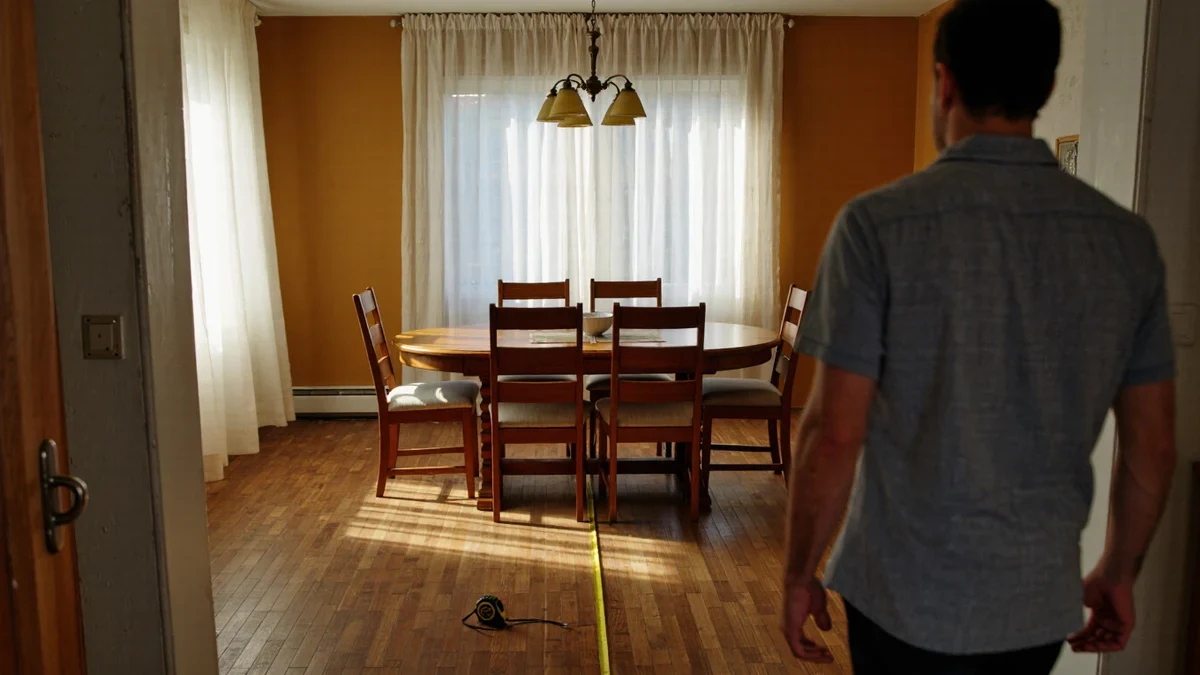
A practical sequence keeps the process calm. First, measure the room and the route in — doorways, stairs, elevator — before falling for anything. Second, decide which piece should carry the room's character; that is the natural candidate for vintage. Third, for the pieces that take daily use, weigh the maker's documented durability claims. Fourth, whatever the choice, keep the invoice and any condition report; on both sides of the market, the paper is what protects the purchase.
What Should You Ask Before Money Changes Hands?
Whichever side of the market a piece sits on, the same small set of questions does the protective work, and every one of them comes from the sellers' and makers' own published guidance. For a vintage piece, the first question is provenance: 1stDibs advises buyers to "Take the time to ask for certificates or records that show the piece's ownership history." The second is attribution: a listing that says "in the style of" is making a weaker claim than one that says "attributed to," and the price should reflect the difference. The third is condition, verified in photographs rather than adjectives — close-ups of the joints and the underside, repairs, replaced hardware, damaged veneer, upholstery issues.
For a new piece, the questions move forward in time rather than backward. What exactly does the warranty cover, and for how many years on this specific model — because Fredericia, like many makers, tiers its coverage by product type, from seven years on chairs and tables to ten on sofas and twenty-five on selected designs? What counts as excluded use, from wrong cleaning methods to prolonged strong sunlight? And what paper starts the clock — with Fredericia, "the date of the original invoice," which makes the invoice itself part of the furniture.
Then comes the question both markets share: how does it get into the room? The 1stDibs guide is blunt about the most common logistical heartbreak — "Make sure it will also fit through your doorways and up the stairs or into the elevator." Measure the route before the purchase, not after the delivery truck arrives, and for vintage pieces ask the seller for the piece's dimensions in writing.
Finally, negotiate where negotiation is expected. "At flea markets and antiques malls, sellers often expect a little bargaining, especially when you're dealing with them directly," 1stDibs notes — the same is not true of a maker's published warranty terms, which are fixed. Knowing which price is a conversation and which is a contract is, in miniature, the whole difference between the vintage and new markets, and a furnished home is usually better for holding a piece of each.