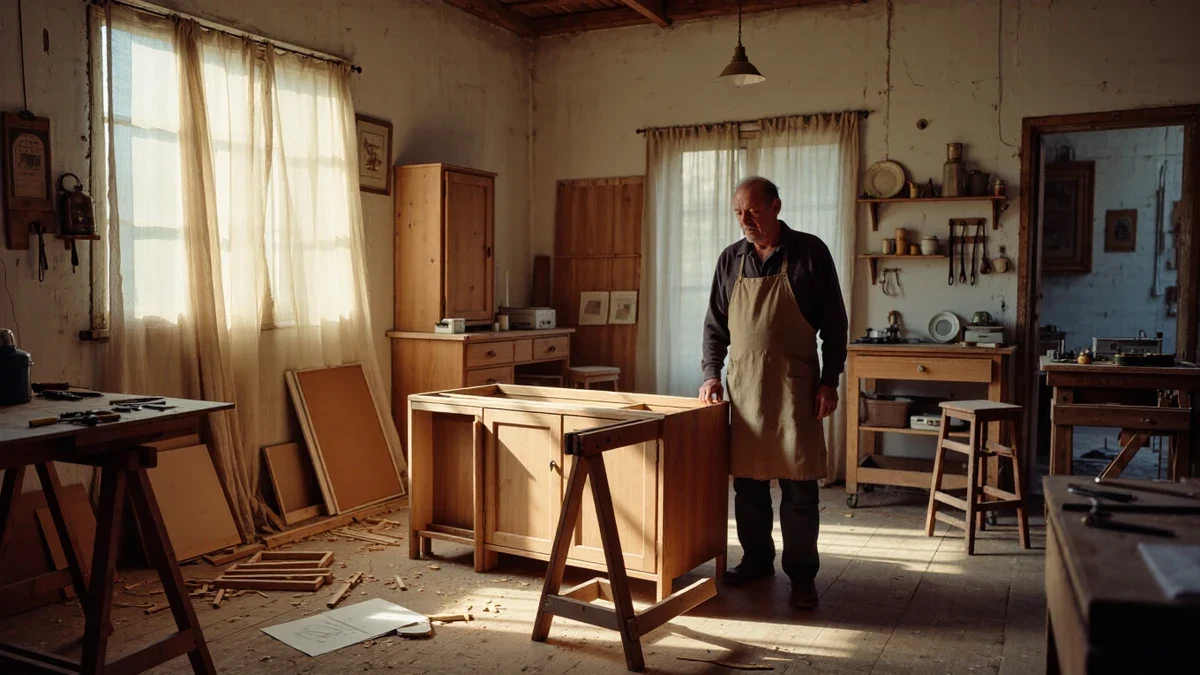
The joints matter as much as the species of wood: woodworkers have used mortise-and-tenon for thousands of years because it is strong and stable, dovetails date to ancient Egyptian sarcophagus builders, and Bob Vila's joinery guide calls the tight joint — two pieces reading as one — the hallmark of skilled woodworking and long-lasting results.
Why do joints determine durability?
Because a joint is where furniture fails. Joinery, in the plain definition of the reference entry on the craft, is the part of woodworking that joins pieces of wood, engineered lumber or synthetic substitutes into more complex items; some joints employ mechanical fasteners, bindings or adhesives, while others use only wood elements such as dowels or plain mortise-and-tenon fittings. The same source is direct about why techniques differ: the characteristics of wooden joints — strength, flexibility, toughness, appearance — derive from the properties of the materials involved and the purpose of the joint, so the joinery used to construct a house differs from that used to make furniture. A chair leg takes racking loads a picture frame never sees, and its joints are chosen accordingly.
Which joints should a buyer recognize?
A short vocabulary covers most of what is on a showroom floor.
| Joint | Where it's found | What it says about quality |
|---|---|---|
| Butt joint | Basic case goods, quick builds | Simplest and weakest of the joinery types; fine only where reinforced |
| Miter joint | Picture frames, door and window casing | Neat 45-degree corners; freestanding mitres need glue plus fasteners |
| Mortise-and-tenon | Chairs, tables, doors | Used for thousands of years; strong and stable, but demands precise cutting |
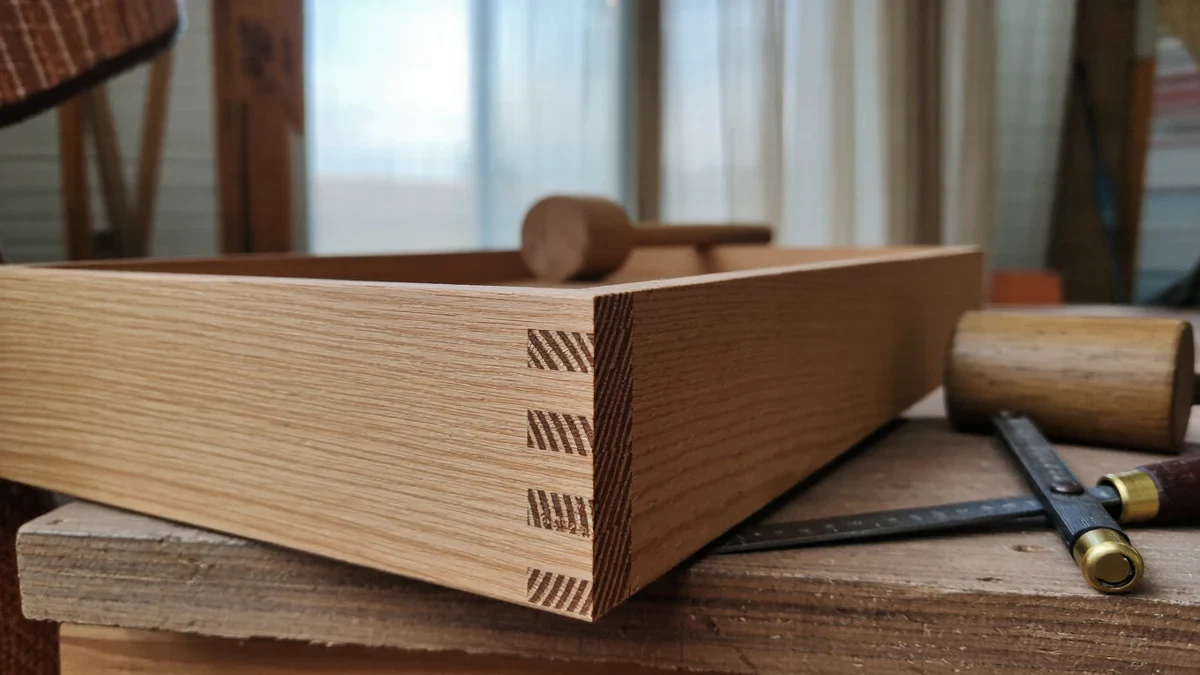
| Dovetail | Drawer boxes | Historic, mechanical lock of interlocking tails; a signature of drawer craft |
| Dowel joint | Chairs, frames, factory-made furniture | Wood-only alternative to fasteners; alignment and glue quality decide its life |
The characterizations follow Bob Vila's guide to the seven sturdy wood joints: a miter joint, for instance, occurs when two end pieces are cut on angles and fitted together — 45 degrees each for a standard 90-degree corner — and nearly all freestanding miter joints require both gluing and additional fasteners. Mortise-and-tenon joints are connected by glueing or locking into place, and the guide notes their precise cutting is what makes them difficult — and worth paying for.
What do joints reveal at different price bands?
That engineering can outrank material. In IKEA's PS 2026 collection, Marta Krupińska's rocking bench achieves all-wood strength by splitting a beam and glueing it back with the grain reversed, so the opposing grains reinforce each other — stronger, Dezeen reported, than an early prototype backed with metal. Friso Wiersma's solid-pine shelf, a reworking of IKEA's 1970s Guide system, wears its carefully considered joints openly, accentuated with red-painted ends. At the affordable end of the market, visible, honest joinery is the tell that a piece was engineered rather than merely assembled.
Why do makers still cut joints by hand?
Precision, and the appearance of precision. Bob Vila's guide notes that most wood joints require precise cuts made with two basic aids: a jig, which guides saw blades or router bits so multiple cuts come out identical, and a fence, the rigid straight edge on a power saw that braces the material being cut. The tight joint — where edges blend seamlessly and two joined pieces look like a single piece of wood — is the guide's own definition of skilled woodworking, and it is exactly what separates a hand-fitted drawer from a stapled one.
Engineered materials have widened the vocabulary without replacing it. The reference entry includes engineered lumber and synthetic substitutes such as laminate among the materials joinery now binds, and modern production adds joints that simply did not exist for a cabinetmaker in 1900 — but the mortise-and-tenon holding a chair rail today works exactly as it did for its ancient users: interlocking wood, glue, and gravity doing the rest. When IKEA's PS 2026 bench needed to be stronger than its parts, its designer reached for reversed grain, not a bracket. That is the joinery lesson worth taking into any purchase: the best furniture is engineered at the joint, and honest about it.
How do you check joints in a showroom?
Look, then wiggle. Sight along a drawer box for dovetails — machine-cut tails are uniform, hand-cut tails vary, and both hold; check that a mortise-and-tenon chair shows no gap where the rail enters the leg; rock a carcase gently from side to side and listen. Glue blocks, screws where dowels should be, and racking movement are the honest reasons to walk away, whatever the price tag.
The guide's summary line is worth memorizing before any furniture purchase: take the time to master the sturdy wood joints, because the stronger the joints, the more long-lasting the results. Species, finish and silhouette can all be photographed; the joint is the part of a piece that decides whether it is still furniture in twenty years.