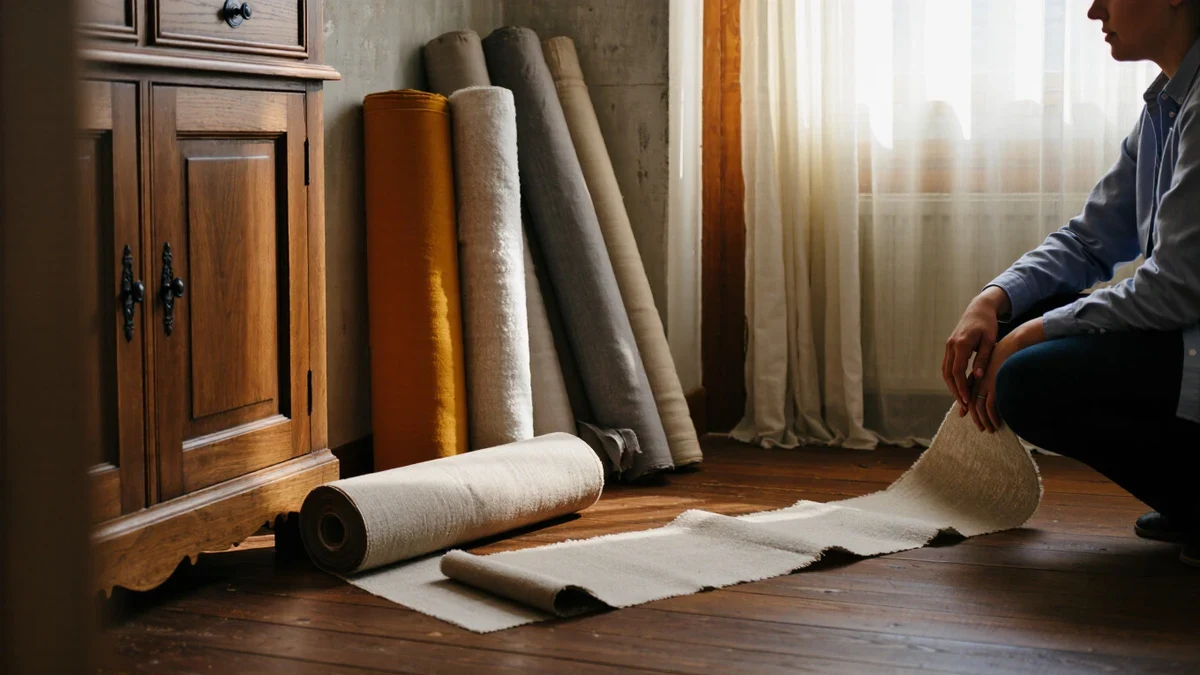
Upholstery fabric is where a sofa's promise lives, and two makers' documentation explains the vocabulary. textile maker Kvadrat lists its Remix 3 wool blend, designed by Giulio Ridolfo, at "100,000 Martindale" under EN ISO 12947; barrier-fabric maker Crypton describes its indoor performance fabric as one "designed to protect your furniture from everyday stains, liquids and odors."
What Does a Durability Number Actually Tell You?
The Martindale rub count is the furniture industry's common yardstick for abrasion, measured under the EN ISO 12947 standard, and Kvadrat publishes it openly — along with its limits. On the Remix 3 product page, the Danish textile maker notes that results above 40,000 rubs "don't indicate product lifespan." That caveat deserves to be quoted in every fabric conversation: a big number is a laboratory abrasion figure, not a guarantee of years, and factors from sunlight to pets to cushion foam shape how a cover ages.
Care instructions belong in the same conversation. Remix 3's published care code reads like a fabric personality test: "Do not wash," "Do not bleach," "Do not tumble dry," professional dry cleaning permitted, and "Iron at medium temperature (max. 150°C)." A wool-rich upholstery textile is built to be maintained where it sits — spot cleaned, professionally cleaned, kept out of the dryer — rather than thrown in a machine.
How Should You Treat Spills on Upholstery?
Kvadrat's cleaning guidance for its upholstery textiles begins with tempo. "Act quickly to prevent stains from setting," the maker advises, then: "Blot liquids, gently scrape off hardened stains, and use warm water or sparkling water for effective stain removal." The prohibitions are just as specific — "never using concentrated detergents, bleach, ammonia or soap intended for hard surfaces" — because upholstery fibers and finishes are chemistry, and the wrong product can set a stain permanently or damage a treatment.
A safe sequence for an ordinary spill, assembled from the maker's instructions:
- Blot the liquid with an absorbent cloth — press, do not rub.
- Gently lift any hardened residue with a dull edge.
- Work the spot with warm or sparkling water on a cloth.
- "Thoroughly rinse the upholstery to remove any cleaning residue," then "Air dry completely before using the furniture again."
For deeper refreshes, Kvadrat points to "Extraction cleaning, or carbonated cleaning" using pH-neutral carbon dioxide solutions — a professional method, not a rental-machine afternoon.
What Is a Performance or Barrier Fabric?
Performance fabric is a category, not a single material, and the company's own description is the clearest map: Crypton Home Fabric is a "durable indoor performance fabric designed to protect your furniture from everyday stains, liquids and odors." The engineering sits in a moisture barrier integrated with the textile, and the company highlights a regulatory landmark: "the first fabric evaluated by the EPA to be disinfected." Crypton also states that it has "created a safer more eco-friendly textile that offers the same high-performance qualities without the harmful effects of 'forever chemicals.'"
For a household weighing a barrier fabric, the trade-offs are practical. Barrier weaves are engineered for cleanup — spills sit on the surface rather than wicking into cushioning — while a wool blend like Remix 3 offers the hand and depth of a natural fiber with professional-care maintenance. Neither is better in the abstract; the question is which failure mode a room can live with.
How Do the Main Upholstery Types Compare?
Only documented claims belong in a comparison, so this table sticks to what the two makers publish about their own products.
| Fabric, per its maker | Documented durability figure | Documented care | Documented claim |
|---|---|---|---|
| Kvadrat Remix 3 (wool blend, designed by Giulio Ridolfo) | 100,000 Martindale, EN ISO 12947; above 40,000 rubs not a lifespan indicator | No wash, no bleach, no tumble dry; professional dry cleaning; iron max 150°C | Spot-clean maintenance on the furniture |
| Crypton Home Fabric (barrier performance fabric) | Stain, liquid and odor protection stated by the brand | EPA-evaluated for disinfecting, per the brand | "Durable indoor performance fabric designed to protect your furniture from everyday stains, liquids and odors" |
Read a sofa label the same way this table was built: ask for the fiber, the Martindale figure and its standard, and the written care code before falling for the swatch. A maker that publishes all three — as both of these do — is handing over the evidence; the rest of the decision is about the life the sofa will lead.
What Should You Ask a Showroom Before Choosing a Fabric?
Three questions, answerable from documentation rather than sales talk, cover most of what matters. First, the fiber and its construction — Remix 3, for instance, is described by Kvadrat as a worsted-yarn textile, a spinning method associated with smooth, dense weaves. Second, the durability figure and its standard: a Martindale number cited without EN ISO 12947 is a number without a method. Third, the written care code — wash, bleach, tumble dry, dry clean, iron — because that code is the contract the household signs at purchase.
The care code deserves a moment of respect, because it encodes the fabric's chemistry. Remix 3's prohibition on washing and bleaching reflects a wool blend's relationship with water and heat; Crypton's entire premise, by contrast, is engineered cleanability, down to the brand's claim of being "the first fabric evaluated by the EPA to be disinfected." Two different chemistries, two different codes, both published — and neither negotiable after purchase.
It is also fair to ask what a durability number is not. Kvadrat's own caveat — that results above 40,000 rubs "don't indicate product lifespan" — is the most useful sentence in upholstery shopping, because it reframes the Martindale figure as one input among several. Sunlight, cushion quality, pets, and the actual rhythm of a household all act on a cover, and a lower-numbered fabric cared for well can outlast a higher-numbered one neglected.
How Do You Match a Fabric to the Life a Room Actually Has?
The honest method is to audit the room before the swatch book opens. A formal sitting room used on weekends asks something different of a cover than a family sofa that hosts homework, snacking and a dog. In the first room, a wool blend with professional-care maintenance — Remix 3's code, in writing — is a reasonable match. In the second, a barrier fabric engineered so that spills sit on the surface is the pragmatic choice, and Crypton's positioning, from stains to odors, is aimed squarely at that household.
The audit also covers light. A fabric that must not be bleached will still face sunlight, and even the best-documented textile ages under a daily dose of UV; the Remicks and Cryptons of the market both publish care guidance rather than immortality claims. Window treatments, rotation of cushions where the design allows, and simple shade discipline extend any cover, whatever its Martindale number.