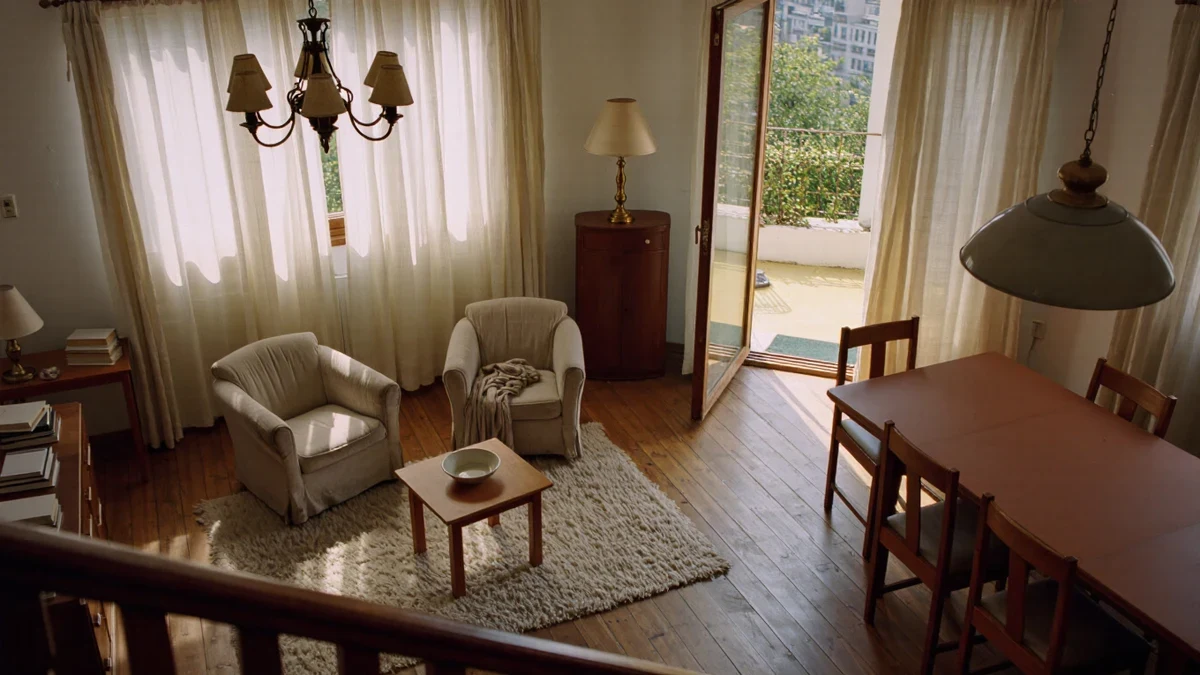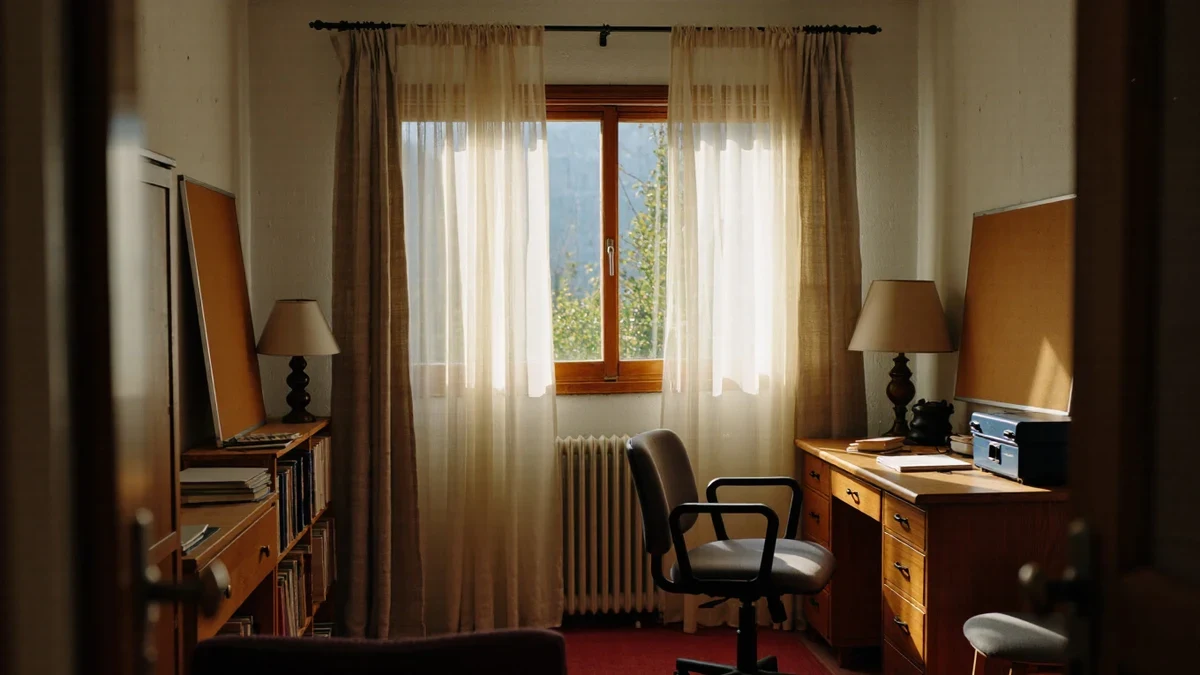
Curtains succeed or fail on two measurements fixed before fabric enters the room. The industry's standard lengths are 63, 84, 108, and 120 inches, according to Bob Vila's curtain guide, and the rod should sit nearly to the ceiling in most eight-foot rooms — a placement choice that changes a window's apparent height more than any fabric does.
How long should your curtains be?
Length sets the mood of the whole room, which is why the guide's author frames the choice as one of vibe: the length of a room's curtains can change its character entirely. The four ready-made lengths — 63, 84, 108, and 120 inches — exist because they map onto the four classic stopping points: the sill, the apron just below it, the floor, and the deliberate puddle of extra fabric on the floor.
Each stopping point carries a different register. A sill-length curtain in a bistro kitchen reads crisp and practical; a floor-length panel of washed linen in a living room reads settled and generous; a puddling velvet in a formal dining room reads theatrical. The 120-inch length exists largely for older apartments and new builds with high glazing, where anything shorter truncates the window and makes the ceiling feel lower than it is.
Bob Vila's guide, written by Deirdre Mundorf and updated by Theresa Clement, recommends deciding the desired finish first and measuring second, because the four lengths are manufactured to hit those specific landmarks on standard windows. Buying by eye, or by window width alone, is the most common mistake the format invites.
Where should the curtain rod go?
Height and width both follow published guidelines rather than instinct. In most homes with eight-foot ceilings, the rod looks best installed nearly to the ceiling, the guide advises; for taller homes, place the rod about a foot above the window. The payoff is architectural: a rod hung high draws the eye up the wall and lets the fabric fall in one unbroken line, which is why designers treat hardware placement as a ceiling-height decision before it is a window decision.
Width works the same way. Bob Vila's hanging guide reports that current style guidelines call for curtain rods three to six inches wider than the window on each side, so a 36-inch window sits best on a rod roughly a foot wider in total. Stacked fully open, the panels then clear the glass, and daylight enters the room unobstructed rather than fighting the fabric.
For width when buying, the curtain length guide gives a concrete rule: add an extra 8 to 12 inches on either side of the window frame, totaling 16 to 24 inches of width beyond the frame, so panels pull clear of the glass and never look too small for the opening.
What do the standard lengths look like in real rooms?
The published numbers translate into a simple planning table for a typical eight-foot-ceiling home.
| Standard length | Typical fall | Rooms where it works |
|---|---|---|
| 63 inches | To or just below the sill | Kitchens, bathrooms, cafe settings |
| 84 inches | To the apron or lower | Bedrooms and family rooms with standard windows |
| 108 inches | To the floor | Living rooms, dining rooms, tall casings |
| 120 inches | To the floor with slack | High ceilings, French doors, puddling fabrics |
How do you measure a window before buying?
The hanging guide's instructions reduce to a sequence a reader can complete with one tape measure and a step stool.
- Decide the curtain type and finish — cafe, apron, floor, or puddle — before touching the tape, since the target determines every measurement that follows.
- Mark the rod position: near the ceiling for eight-foot ceilings, about a foot above the window in taller rooms.
- Measure from the rod position down to the chosen stopping point; that drop is the length to buy.
- Measure the window frame width and add 16 to 24 inches total, keeping the rod 3 to 6 inches beyond the frame on each side.
- Check the wall for studs or masonry at the bracket positions, and use anchors rated for the rod and fabric weight where no stud exists.
One caution belongs here: bracket installation into masonry, tile, or plaster over questionable lath is wall work, not styling, and readers unsure of their wall build should hand the drilling to a qualified professional rather than risk both the wall and a full-length panel coming down.
Which fabrics make the most of these rules?
Length rules are fabric-blind, but fabrics are not length-blind. Heavy velvets and wool blends hold a crisp floor-length line and reward the 108-inch specification; washed linen and cotton slub relax a half-inch on the floor and suit both the 84 and 108 lengths; sheer materials, hung on the same high rod, make the ceiling-height trick legible because the glass stays visible through the weave.
The consistent thread across the published guidance is that hardware comes first, measurements second, fabric last. A room with the rod near the ceiling and the panels clearing the glass will read taller and calmer in sheer cotton or heavy wool alike — which is why the placement rules, not the textile budget, are where a good window treatment actually begins.
How do bay windows and radiators change the plan?
Two common architectural features bend the standard rules without breaking them. Under a bay, a single rod spanning the full width usually reads calmer than three small rods on each facet — the corners swallow fabric, and one continuous line restores the window's geometry. A bay also invites inside mounting on the flanks, where sill-length panels at 63 inches keep the window seat usable while the longer central span carries the height.
Radiators demand honesty about where fabric can fall. A floor-length panel trapping heat against a radiator wastes warmth and stresses the textile, which is why the apron and sill lengths exist as more than style choices. Where a radiator sits under the window, the 84-inch length becomes the practical default and the 63-inch cafe curtain becomes the crisp alternative — the published lengths map neatly onto the obstacles older homes actually present.
How do you choose between blackout and sheer?
Function picks the weave before color gets a vote. Bedrooms that face streetlight or early sun take lined panels — the same 84 or 108 length, but with a lining that lets the fabric drape while the room goes dark; nurseries and shift-workers' rooms take the same logic further with dedicated blackout weaves. Living rooms that need privacy at dusk without losing the last light take a sheer or a loose linen weave on a high rod, sometimes layered under a heavier panel on a second rod for the full evening.
The layering approach rewards the placement rules twice over: both rods sit high and wide, the sheer runs closest to the glass at floor length, and the over-panel runs longer and heavier. The result is a window dressed for both noon and midnight — and, because both layers hang from the same corrected hardware, neither one ever fights the frame it was bought to flatter.
What hardware suits each length?
Hardware scales with weight, and weight scales with length. A 63-inch cafe panel on a slim tension or café rod weighs almost nothing; a 120-inch lined velvet on a twelve-foot wooden pole is a two-person installation with center brackets in the middle of the span. The middle of the range — the workhorse 84 and 108 lengths in cotton and linen — suits the standard decorative rod with two screw-mounted brackets, exactly the configuration the hanging guide describes for bedrooms and living rooms.
Brackets are the detail that quietly governs everything above. A rod supported at both ends only bows over time; a long span needs a third bracket, which means a center seam of hardware the panels must clear when opened. Planning that bracket before buying the rod — rather than discovering the bow two winters later — is the difference between curtains that operate and curtains that are merely arranged.