Layered lighting combines ambient, task, and accent light so a room can change its mind — bright for homework, soft for dinner, focused for reading. Writing in Forbes on October 31, 2025, lighting founder Jamie Young puts it directly: "A layered lighting approach is essential: combining ambient, task, and accent lighting will define the room's function and feel."
What are the three layers of lighting?
Ambient, task, and accent — plus the fixtures that are themselves decoration. Lumens, the lighting retailer, defines the practice as "combining multiple light sources at different heights, intensities, and angles." Ambient light is "the base layer, the overall illumination that fills a room and allows you to move through it comfortably." Task lighting "delivers bright, focused illumination exactly where you need it for specific activities." Accent lighting "draws the eye to architectural details, artwork" — the layer that gives a room its personality. Decorative fixtures, from sculptural pendants to candle sconces, are "chosen primarily for their aesthetic impact."
| Layer | Job | Typical fixtures |
|---|---|---|
| Ambient | Base illumination for moving through the room | Ceiling fixture, recessed downlights, wall washers |
| Task | Focused light for a specific activity | Reading lamp, under-cabinet strip, desk lamp |
| Accent | Directs attention to art and architecture | Picture light, track head, uplit plant |
| Decorative | The fixture is the point | Sculptural pendant, candle sconce, table lamp as object |
How do you build a lighting plan room by room?
Start with what the room is for, then stack the layers. Interior designer Nadia Watts, speaking to Forbes about her own dining room, describes pairing a statement-making fixture with a more functional layer so the room can serve both ceremony and everyday life. Designer Vy Truong, in the same report, recommends identifying activity zones — a place to read, a place to eat, a place to work — and giving each its own source rather than relying on a single ceiling fixture to do everything.
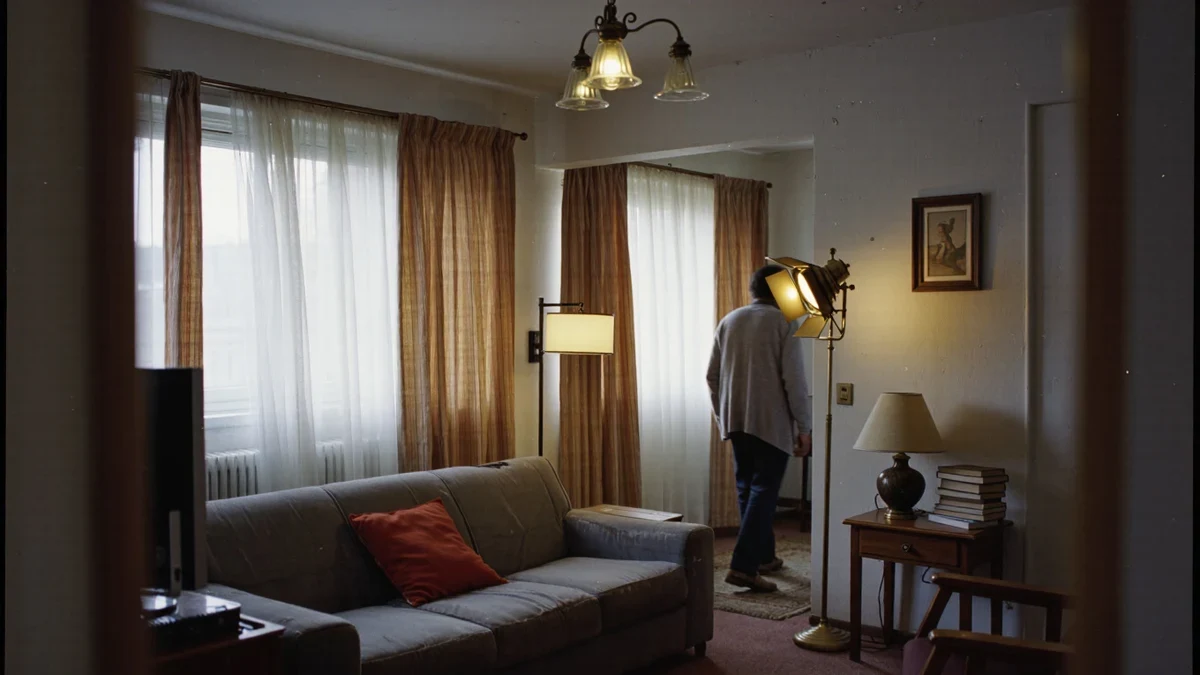
The mistake most rooms make is stopping at one layer. A ceiling light alone flattens a room; every surface gets equal, shadowless light and nothing reads as important. Adding one task lamp and one accent source — even without rewiring, since both can plug in — changes how a living room photographs and how it feels at nine in the evening.
What color temperature should each layer be?
Warmer than the hardware store default, for most homes. Jamie Young's guidance, as reported by Forbes: 2700 Kelvin belongs in living rooms and bedrooms, where the goal is comfort; around 3000K suits kitchens and bathrooms, where tasks happen but the space should still feel residential. Mixing temperatures within one view — a cool bulb in a lamp beside a warm ceiling fixture — is what makes a room feel subtly wrong; matching within a layer, or warming deliberately toward evening, is what makes it settle.
Dimmers are the cheapest luxury in lighting. Lumens calls dimmer switches and smart controls "essential tools" for layering, because they let the ambient layer drop away so task and accent fixtures take over. Interior designer Heather Mastrangeli, speaking to Forbes, recommends dimmers on as many layers as possible so the same room can host a bright morning and a low evening without moving a single lamp.
How high and how far apart should fixtures sit?
Height is what makes layering visible. A pendant that hangs roughly 30 to 36 inches above a dining surface keeps light on the meal and faces in flattering focus; a floor lamp that shades at shoulder height beside a reading chair keeps glare out of the book. Sconces flanking a mirror at eye level light a face evenly, which is why designers reach for them in bathrooms and entries. And designer Stephanie Brown, in the Forbes report, favors warm lighting in entryways specifically because first impressions of a home happen in the few seconds the eye takes to adjust.
How does layering change from room to room?
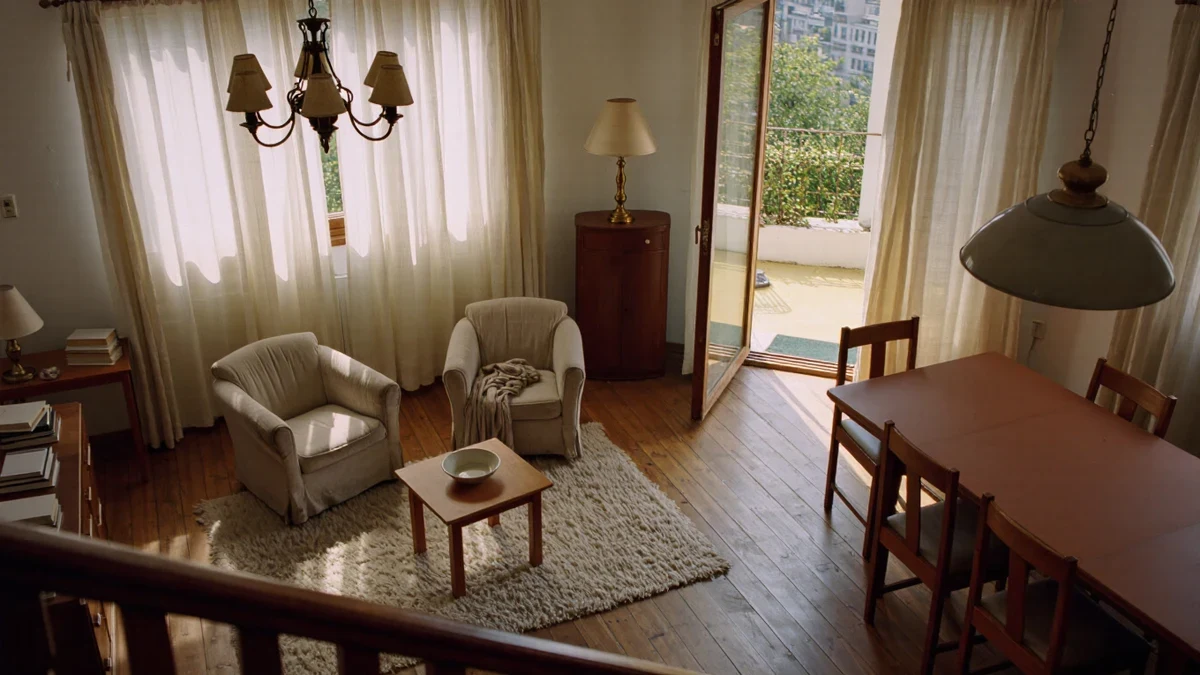
In a living room, the layering runs deepest: an ambient ceiling source or wall wash, a reading task lamp beside the best chair, accent light on one picture or one shelf, and perhaps a decorative lamp that never gets switched on at all because its job is to be beautiful at noon. Watts's dining-room approach — a statement fixture for ceremony backed by functional sources for weeknights — is the template: the room dresses up or down without moving furniture.
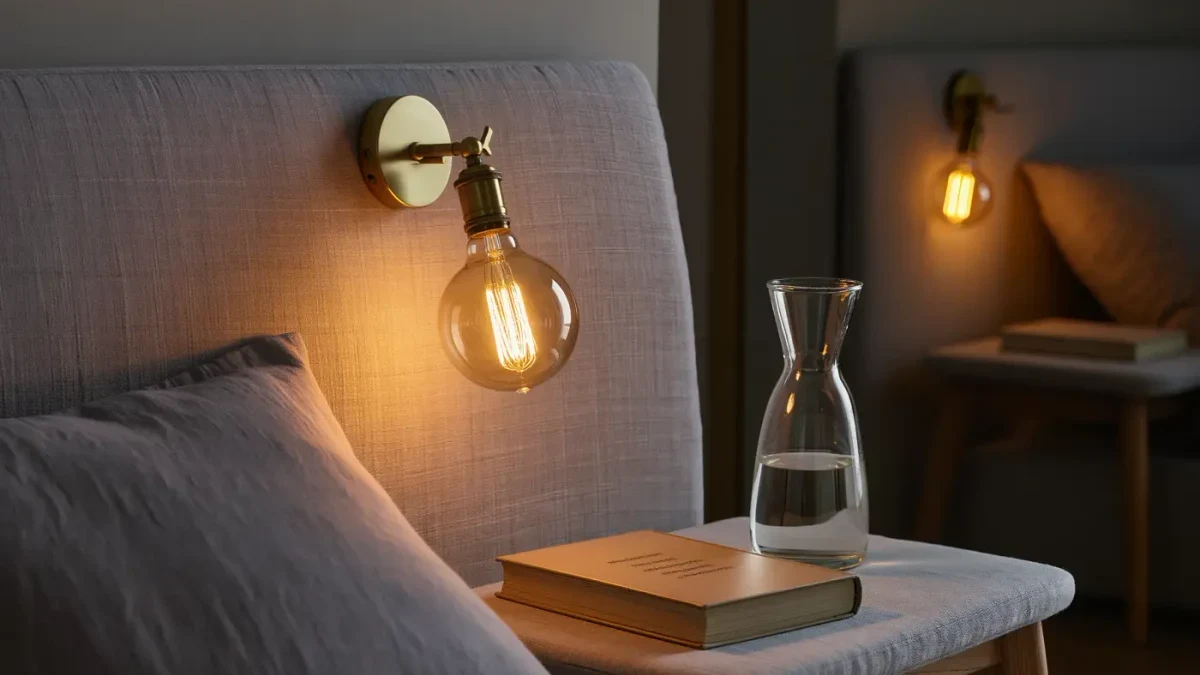
Bedrooms are task-first in disguise. A pair of bedside lamps at reading height, warm-dimmed to 2700K in Young's guidance, does more for the room than a central ceiling light ever will; accent light belongs on whatever the room wants remembered — a headboard wall, a single drawing. Kitchens want the opposite balance: strong task light at every work surface, ideally under-cabinet strips placed at the front edge of the cabinets so they light the counter rather than the backsplash, with ambient and accent layers softening the room for the hours when no one is cooking.
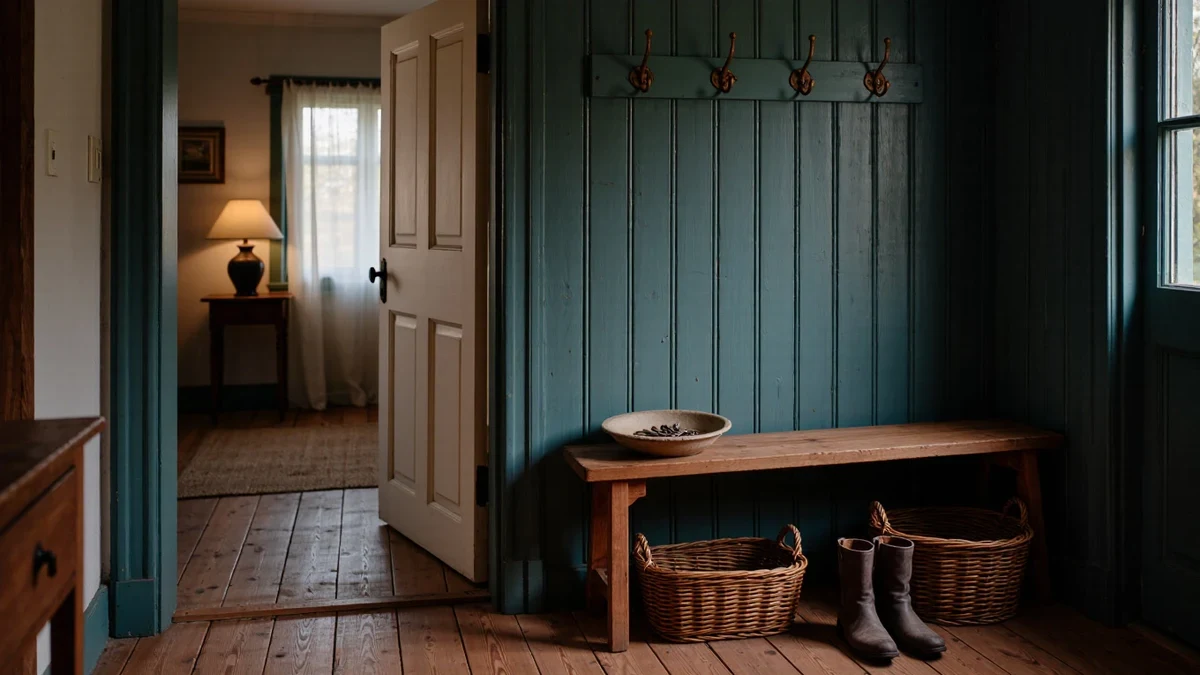
Entries and hallways, the passages everyone underlights, reward the cheapest interventions: Brown's warm-lighting advice for first impressions, a picture light on whatever hangs opposite the door, and runner-scale low sources along a corridor so the walk from room to room stops feeling like crossing a stage.
What are the most common layering mistakes?
Recessed downlight grids, laid on like a ceiling of spotlights, are the signature error of the past two decades: everything evenly bright, nothing emphasized, faces lit from above like an interrogation. Overly bright ambient light is the second — a room that never gets below restaurant brightness cannot feel calm, which is the case for dimmers Mastrangeli makes. Mismatched color temperatures within one view, forgotten corners that stay black while the room's center glows, and pendant cords left at random heights all read as noise. The corrections are mechanical: lower the ambient, warm the bulbs to one standard, add one source to the darkest corner, and hang pendants to a rule rather than to the length the cord happened to ship at.
Can you layer lighting in a rental?
Yes, and mostly without tools. Rental-friendly layers: plug-in sconces and picture lights that mount with hardware-light strips, floor lamps with warm 2700K bulbs placed at the room's dark corner, a dimmable smart bulb in the existing ceiling fixture, and battery picture lights for art. Each adds a layer the landlord never wired. The rule of thumb from every designer cited: three light sources per room, at three different heights — floor, table, and ceiling or wall — is the minimum at which a room stops reading as lit and starts reading as designed.
None of this requires a renovation budget. It requires treating light as a material, the way a designer treats walnut or bouclé: chosen for warmth, placed for a purpose, and layered so the room — like the people in it — can change its mood without changing its clothes.