Plaster, natural stone, and wood floors reward patient ownership and punish the same mistake: the wrong cleaner. Venetian plaster is a lime-and-marble-dust finish burnished by hand, according to designer Kerrie Kelly in Veranda's plaster guide, while the National Wood Flooring Association warns that a wet mop is the fastest way to ruin a wood floor.
What makes plaster different from painted drywall?
Plaster is a mineral coating applied in layers over walls, not a film of paint sitting on top of a panel. In Veranda's guide to the material, interior designer Kerrie Kelly, FASID, describes the technique: it is crafted by layering plaster mixed with lime, marble dust or other additives, then burnished to create a smooth, reflective surface. The result reads more like stone than paint, with a depth that shifts as daylight moves across it.
That depth is structural as much as aesthetic. Because the material is built up in thin coats over lime, it carries a soft irregularity no roller can imitate, and seams or trowel marks become part of the finish rather than a defect to hide. Designers quoted in the same piece note a broader resurgence of plaster finishes, tied to growing interest in natural materials in interiors.
Placement matters. The same Veranda guide records designers using plaster most often on vent hoods and fireplaces, though it can be applied to walls and ceilings, and over wood, brick, stone, and drywall substrates. In a living room, a plaster fireplace surround gives the room a quiet centerpiece without adding a single object.
How do you care for Venetian plaster walls?
Treat plaster the way you would treat stone: gently, and rarely. The burnished surface of Venetian plaster is dense, but it is still a mineral finish, so abrasive creams and acidic cleaners dull the sheen rather than clean it. A soft dry cloth for dust, and a barely damp cloth for marks, is the routine most consistent with the makers' own descriptions of the finish.
Because the surface is hand-applied in layers, small damage does not mean repainting a wall. A trained plasterer can patch and re-burnish a localized area, blending new material into old. That repairability is one of the material's practical advantages over wallpaper or paint, where a patch usually announces itself.
Which stones suit kitchens and baths, and how are they cleaned?
Marble, limestone, travertine, granite, and slate each behave differently, but they share one rule. Tile manufacturer Daltile's published stone-care instructions state that natural stone countertops and floors should be cleaned with neutral cleaners specifically designed for stone, and that stone cleaners should never contain acid or bleach. Acids, even a light solution of vinegar and water, will etch and eventually damage many varieties of natural stone, the company notes.
The etching is chemistry, not opinion: acids dissolve the mineral surface of calcite-bearing stones such as marble and limestone, leaving a dull patch. Daltile's guide adds that light colored marble and nearly all limestone are subject to staining, and spills on such materials should be cleaned up immediately. For deeper soiling, the company describes a pH-neutral cleaner applied with a sponge or soft bristle brush, then buffed dry.
Granite and slate, denser and less calcareous, forgive more. Whichever stone is underfoot or under the coffee cup, the daily habit that matters most is the same one Daltile repeats throughout its instructions: limit the time liquids sit on the surface, and dry it thoroughly.
What does wood floor maintenance actually involve?
Less chemistry than discipline. The National Wood Flooring Association's maintenance guidance for homeowners keeps the routine short: sweeping, dust mopping, or vacuuming using the bare floor setting to remove dust and dirt, and cleaning spills immediately with a dry or slightly damp cloth. The NWFA advises against wet mops and steam mops, which will damage the finish and the wood over long periods of time.
The association also recommends using a cleaner made specifically for the finish on the floor, something a flooring professional can provide or recommend when the job is completed. When wood floors start to look a little dull, the NWFA notes, they can be renewed through recoating, which involves applying a new coat of wood floor finish, rather than full sanding.
Between cleanings, grit is the enemy; a mat at the door and felt pads under chairs prevent the scratches that no cleaner can undo. Individual maintenance schedules vary depending on use, wear and tear, and lifestyle, the NWFA notes.
How do the three materials compare in a real home?
Choosing among them is easier side by side. The table below gathers the documented behavior of each material from the sources above.
| Material | Documented behavior | Care routine | Source |
|---|---|---|---|
| Venetian plaster | Layered lime and marble dust, burnished; marble-like sheen | Dust with dry cloth; avoid abrasives; patchable by a plasterer | Veranda guide |
| Marble / limestone | Etched by acids, including vinegar solutions; stains readily | pH-neutral stone cleaner only; wipe spills immediately | Daltile care instructions |
| Granite / slate | Denser, more acid-tolerant natural stone | pH-neutral cleaner, sponge or soft brush, buff dry | Daltile care instructions |
| Wood floors | Finish damaged by wet mops and steam | Sweep or dust mop; finish-specific cleaner; recoat when dull | NWFA maintenance guide |
Which material belongs in which room?
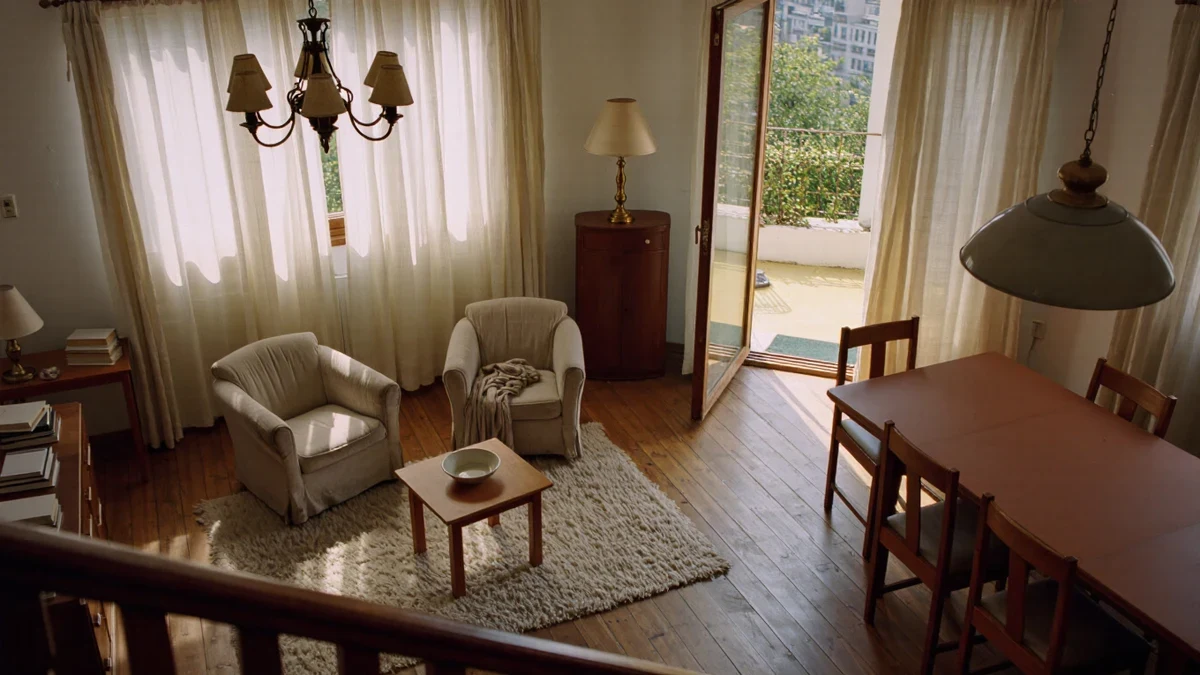
Pair the material to the moisture and mess a room produces. Wood floors reward living rooms and bedrooms, where their warmth carries a scheme of linen and oiled walnut; the NWFA's guidance is built for exactly these everyday spaces. Natural stone belongs where surfaces get wet or hot, provided the owner accepts the immediate-spill discipline Daltile describes; bathrooms and hearths are its natural territory, with granite the more forgiving choice near anything acidic.
Plaster is the connective tissue. Applied to a fireplace wall or a hallway, it gives the rooms around it a common ground, the same way a repeated paint color does, but with movement and depth. In the Veranda guide, Kelly describes the finish as one that ages gracefully, developing a patina over time, which is the honest case for all three materials: none of them looks better pretended to be new.
When should a professional take over?
Each of these materials has a line where amateur care stops being wise. On plaster, that line is any damage wider than a hairline or any change to a whole wall: blending a patch into a burnished finish is a plasterer’s skill, and the Veranda guide’s designers treat the material as a trade installation rather than a weekend project. On stone, Daltile’s instructions note that a stone specific poultice can remove stains and grout haze, and that efficacy depends on the nature of the stain and how long it has been in the stone; an old or deep stain that survives a poultice is a stone restoration professional’s problem, not a cleaning problem.
On wood floors, the NWFA frames recoating as the routine renewal path, applying a new coat of finish, which implies that anything needing full sanding, deep gouges, water damage, or uneven wear across a room, has left the maintenance category entirely. The honest budgeting rule: reserve for the professional moments the way the materials themselves reserve their character, rarely and deliberately.
Can one room carry all three materials?
It can, and the classic combinations do it instinctively. A bathroom with limestone counters, a plastered wall, and a wood floor is the shelter-magazine formula because the three materials share a mineral-adjacent warmth while behaving differently where it counts: the stone takes the water, the plaster takes the light, and the wood takes the footsteps. The same logic scales down to a rental or a first apartment, where one plaster-look accent wall, one stone tray, and one good wooden stool deliver the material story at a fraction of the renovation.
The discipline is contrast, not quantity. Because each material has its own sheen behavior, burnished plaster catching light, honed stone absorbing it, oiled wood glowing from within, the room reads richest when each is allowed a clear field rather than being crowded against its neighbors. One plaster fireplace wall does more for a living room than three material effects competing on one wall ever could.