Storage furniture is the most technical object in a bedroom, governed by wood science and federal law together. The Wood Database notes that interior furniture woodwork should usually target 8 percent equilibrium moisture content. The U.S. safety standard for clothing storage units, in force since 2023, requires dressers to be stability-tested and labelled. The chest satisfying both is worth buying.
Why does solid wood storage furniture move?
Because wood is hygroscopic, in the Wood Database's phrasing, and will gain or lose moisture from the air based upon the conditions of the surrounding environment. That exchange produces swelling and shrinking the reference calls movement in service, and it is responsible for what the site frankly describes as so much mischief and so many malfunctions in woodworking. A case piece, a dresser body with drawers travelling inside it, is a box of moving parts in the most literal sense.
The 8 percent target exists because homes are the environment. Lumber destined for interior furniture, the Wood Database's moisture guide explains, reaches that equilibrium when stored at approximately 40 to 45 percent relative humidity, the band most heated and cooled houses occupy for much of the year. Wood dried to the outdoor climate of a humid summer will swell indoors; wood left too wet risks checking and splitting in the dry winter. The maker who buys kiln-dried stock and works it promptly is engineering against the calendar.
For a reader, movement explains the classic field symptoms. Drawers that glide in January and stick in July, or a top that shows a hairline seasonal gap at a joint, are behaving like wood rather than failing like furniture. Species matters too, which is why the same reference tracks movement in service by species for cabinet woods, and why a maker's choice of material is a stability decision before it is an aesthetic one.
How do you read a dresser's construction at the shop?
Reading case construction is a two-minute inspection once the physics is understood, and the wood's behaviour tells you what to look for. The sequence:
- Ask what the panels are. Solid wood moves with humidity; engineered panels move far less, and a mixed construction, solid fronts on engineered carcasses, is a documented strategy for keeping faces stable while hidden parts stay calm.
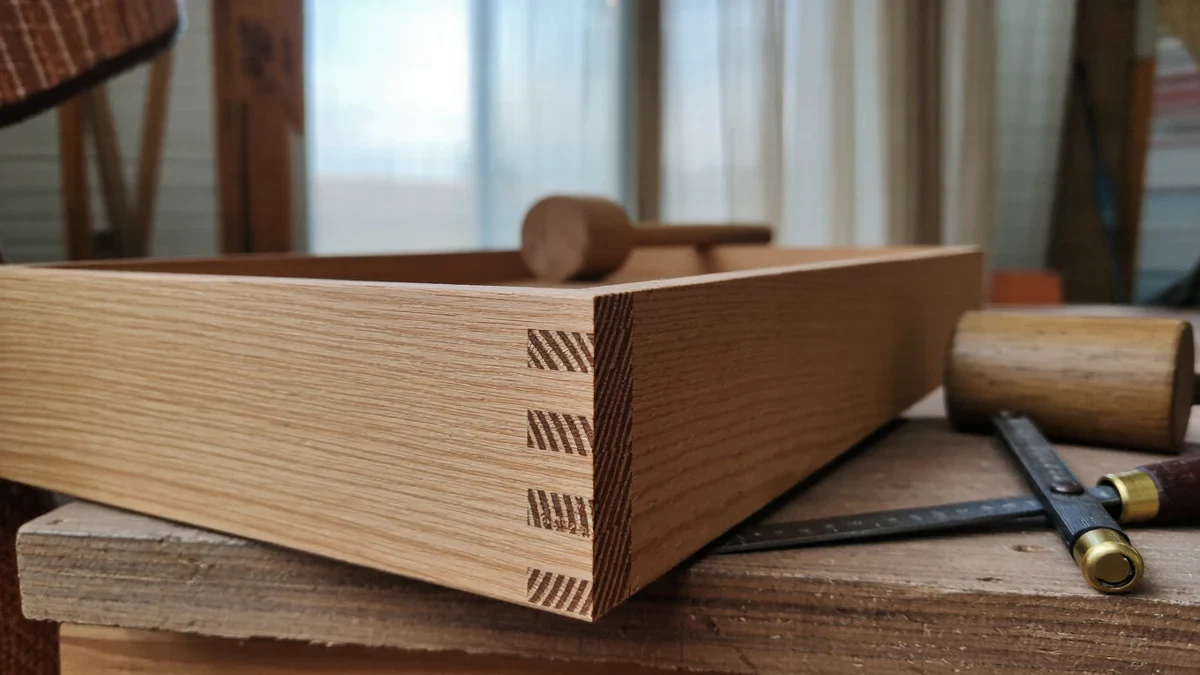
- Look for movement allowance. Somewhere in a well-made drawer or case back, panels should sit in grooves rather than being glued flat across a wide grain, because a wide board pinned at every edge has nowhere to go in July.
- Work the drawers through a cycle. Slide each drawer fully out and back; the fit you feel today is the loosest it will be all year if the house runs dry, and the tightest if it runs humid.
- Find the hang tag. Under the mandatory standard, stability information is required on the product, and its presence is the fastest check that a unit was built and tested to the rule rather than merely styled.
- Check the anchoring hardware. A compliant unit should ship with or specify wall-anchoring equipment, and its absence is a question to ask before purchase, not after delivery.
None of this requires expertise, only the willingness to treat furniture as the wood and the law both treat it: as an object with measurable behaviour and documented obligations.
What does the federal safety rule require of dressers?
Since the STURDY Act era, dressers in the United States are governed by a mandatory standard rather than goodwill. The Federal Register's May 2023 direct final rule records that the Commission determined ASTM F2057-23, the voluntary standard, met STURDY's requirements, and adopted its performance requirements as the mandatory consumer product safety standard for clothing storage units, superseding the November 2022 rule. The Commission's rationale, stated in the original 2022 rule, is an unreasonable risk of injury and death, particularly to children, associated with clothing storage units tipping over.
In practice the standard requires units to be tested for stability, exceed minimum stability requirements, bear labels containing safety and identification information, and display a hang tag with performance and technical data about the unit's stability. Those hang tags are the consumer-facing evidence of compliance: a documented stability number on the product, not a promise in listing copy. The rule has remained an active regulatory presence, with the Commission's information-collection requirements for the standard extended in a January 2026 Federal Register notice.
How should a reader choose and live with a case piece?
Buy the physics first. A documented stability test and hang tag, joinery that allows panels to move, and drawers fitted with room for seasonal change are the three markers that a maker has accounted for wood's hygroscopic nature. Then maintain the room, not just the furniture: keeping a bedroom inside a moderate humidity band keeps case goods nearest the 8 percent equilibrium they were built around.
The milestones and mechanics, condensed:
| Document or mechanism | What it says or does | Why a reader cares |
|---|---|---|
| 8% EMC target | Interior furniture woodwork equilibrium at 40–45% RH | Explains seasonal sticking and gaps |
| Movement in service | Swelling and shrinking as humidity changes | Joints and panels must be designed to accommodate it |
| ASTM F2057-23 / 16 CFR standard | Stability testing, labelling, hang tag | Look for the hang tag when shopping |
| May 2023 direct final rule | Adopted the voluntary standard as mandatory | Compliance is law, not marketing |
Living with the piece then becomes humidity management and honesty about use. A bedroom that swings between very dry winters and humid summers asks more of its case goods than the 40 to 45 percent band the wood was prepared for, and a small hygrometer, not a dehumidifier the size of a wardrobe, is the proportionate instrument for knowing where the room stands. Placement matters in the same quiet way: a dresser against a poorly insulated exterior wall experiences a different climate than the same dresser three feet into the room, and radiators are the enemy of every joint in between.
Drawers deserve the same seasonal patience. Easing a sticky drawer with wax on the runners is furniture care; planning wood off the drawer front to solve a July stick is a repair that will rattle in January. The wood did not fail; it moved, and the correct response is the one the maker built in.
One instruction outranks all styling advice: whatever the tag says, anchoring is the consumer's half of the bargain, and wall-anchoring hardware belongs in studs or properly rated anchors per the manufacturer's instructions. Between a maker who understands moving wood and a rule that proves standing furniture can be measured, the modern dresser has never been more honestly documented, and the reader's job is simply to read what it came with.