Upholstery care starts with a vacuum and a tag: regular vacuuming with an upholstery attachment, and the fabric's cleaning code, decide almost everything that follows. This Old House's cleaning guide puts the first step bluntly — "you can renew your furniture surprisingly well with nothing more than a vacuum cleaner with an upholstery attachment."
What do the upholstery cleaning codes mean?
The tag under the cushion is a care map. Good Housekeeping's cleaning experts, in a guide published February 24, 2026, explain that "these codes tell you what cleaning methods are safe for your sofa": W means water-based cleaners are safe, W/S means either water- or solvent-based, S means solvent-only, and X means vacuum only — professional cleaning for anything deeper. Reading the code before reaching for a spray bottle is the difference between removing a stain and setting one.
| Code | Safe method | Care implication |
|---|---|---|
| W | Water-based cleaners | Mild soap solutions and steam-free damp cleaning are permitted |
| W/S | Water- or solvent-based | Widest home options; still spot-test first |
| S | Solvent-only | Water spots fabric; use a dry-cleaning solvent per label |
| X | Vacuum only | Professional cleaning for soil and stains |
What does a basic cleaning routine look like?
A monthly rhythm keeps most fabrics healthy, assembled from This Old House's published steps and Good Housekeeping's expert guidance:
- Vacuum the entire piece — back, arms, skirt, and cushions — with the upholstery attachment; Good Housekeeping directs readers to "use your vacuum's upholstery attachment to go over the entire sofa."
- Loosen ground-in grime along seams with a stiff toothbrush or a can of compressed air, then vacuum again, per This Old House.
- Treat spots by code. For W fabrics, This Old House suggests dissolving "a tablespoon of dishwashing detergent in a gallon of water" and dampening a microfiber cloth with it.
- Blot, never rub. Good Housekeeping's experts say to "blot spills as soon as possible using a clean, absorbent cloth," because rubbing "can push the stain deeper into the fabric."
- Apply cleaner to the cloth, not the fabric — "never apply directly to the fabric" — and work the stain from the outside in, per Good Housekeeping.
- Let the piece air dry completely before use; This Old House warns against hairdryers and space heaters, which can shrink or stain fabric.
How do you keep upholstery from needing deep cleaning?
Rotation and sunlight discipline. Flipping and rotating loose cushions weekly spreads wear evenly across the seat; keeping the piece out of direct sun slows fading of both fabric and dye. A throw blanket on the armrests and headrests — where body oils collect first — buys years on a sofa's visible life. And a no-shoes, no-food-on-the-upholstery house rule does more than any product.
Vacuuming itself is the preventive core. It removes the abrasive grit that grinds into fibers every time someone sits down, which is why every expert guide begins there rather than with a stain.
How do you care for specific fabrics — linen, bouclé, performance weaves?
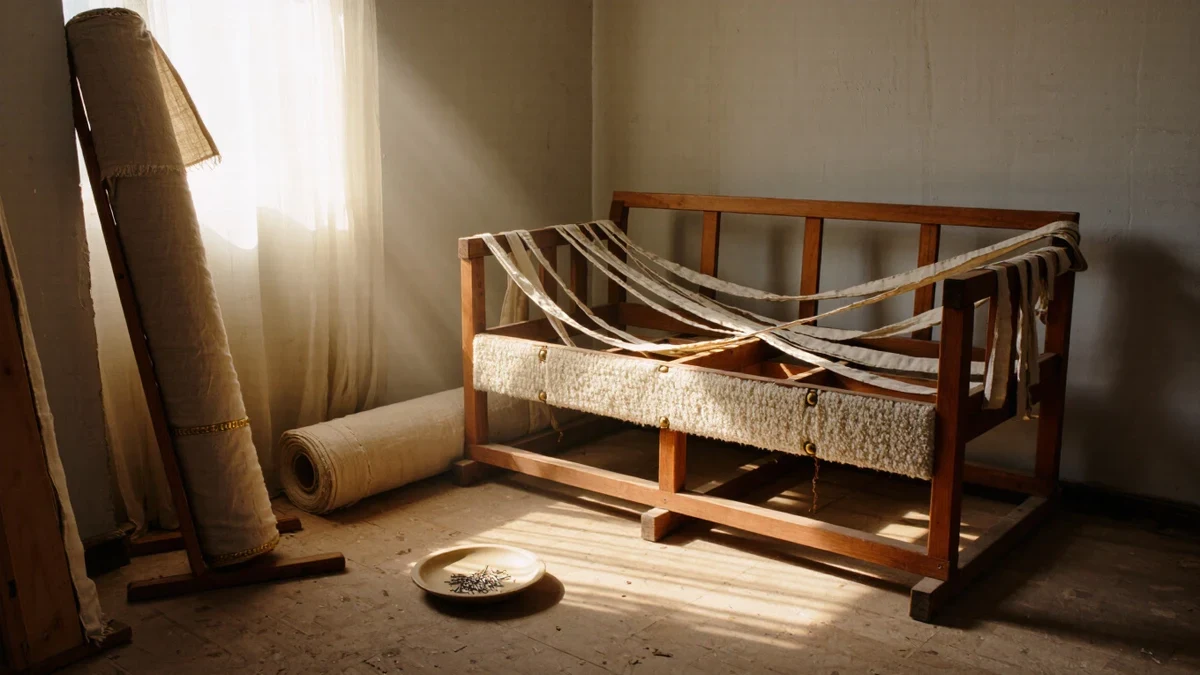
Woven texture changes the frequency of care more than its method. Smooth, tight plain weaves and performance fabrics shed soil visibly and forgive a monthly vacuum; slubbed linen and loose bouclé hold grit deep in their loops, so a weekly pass with a soft brush attachment is what keeps the texture crisp rather than matted. Velvet wants all strokes in one direction and, on crush marks, gentle steam held at a distance — never contact. Wool blends pill where bodies rub, and a fabric shaver used flat and lightly restores the surface without pulling fibers. The tag still rules: a linen woven to an S code takes solvent, not the soapy water its texture seems to invite.
What should sit in an upholstery care kit?
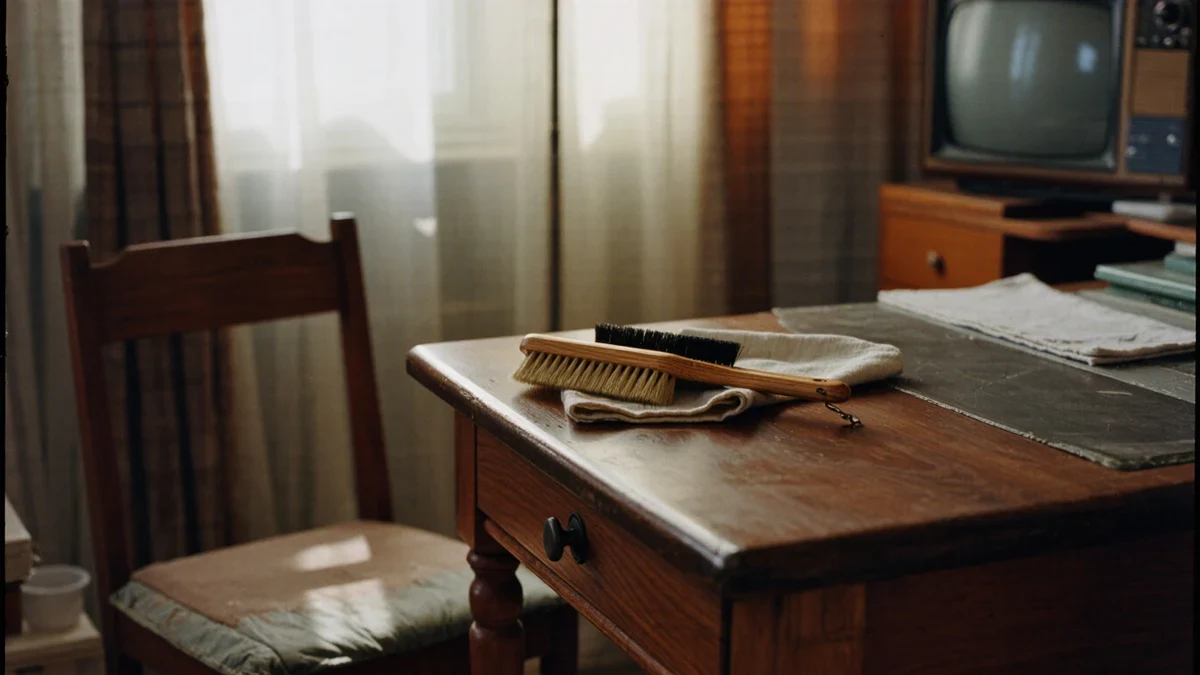
Very little, deliberately, and all of it from the published steps: a vacuum with its upholstery attachment and crevice tool; a stiff toothbrush and a can of compressed air for seams; a gallon jug and a tablespoon measure for the detergent solution This Old House specifies; clean white microfiber cloths, so a transferred dye never becomes the story; and a spray bottle for clear water rinsing by code. Nothing with bleach, nothing with a rotary brush head, nothing heated for drying. The kit costs less than one professional visit and handles the years between them.
What about homes with children and pets?
The routine scales, the sequence holds. Pet hair lifts first with the vacuum's upholstery attachment before any moisture touches the fabric; accidents blot with plain water first, enzyme cleaners by code, and always from the outside in so the stain does not spread into a map. A washable throw over the seats a dog actually uses, cushions rotated weekly so one spot does not wear alone, and a rule that muddy towels never dry on the sofa arms do the quiet prevention. Families choosing new upholstery can lean on the codes too: a W-coded performance weave is the forgiving choice for a house that runs on snacks and rain boots.
When should cleaning stop and a professional start?
At the boundaries of the code and the fabric. X-code fabrics, vintage upholstery with unknown fibers, anything with down-wrapped cushions that have soaked through, and pieces with documented provenance or delicate hand-work all belong with an upholstered-furniture cleaning professional, whose water extraction and solvent choices are matched to the fabric. Horsehair and antique silks are cleaning projects for specialists only. The line is the same one that governs the rest of the house: routine care at home, intervention in the workshop.
How often should each step actually happen?
A calendar keeps the routine honest: vacuum weekly on smooth weaves and weekly-to-twice-weekly on textured bouclé; rotate and flip loose cushions weekly; spot-treat within minutes of a spill, since fresh stains respond to plain blotting that set-in ones never will; air-dry fully, overnight if needed; and once or twice a year, take the cushions off and vacuum the frame, deck, and beneath the sofa — the seam where the base meets the fabric is where a decade of a home quietly accumulates. Professional cleaning by code, for pieces that need it, lands every one to three years depending on use.
The rhythm, not any single step, is the care. A sofa vacuumed weekly and blotted promptly can go years without a deep clean; the same sofa ignored for a season acquires the ground-in grime that no home method lifts.
Does fabric choice change the routine?
It changes the frequency more than the method. Performance weaves and tight plain weaves shrug off monthly vacuuming and quick blots; slubbed linens and loose bouclé trap grit in their texture and reward a weekly pass with the brush attachment. Velvet wants strokes in one direction; leather, which is not woven at all, wants its own products entirely. Whatever the weave, the sequence holds — vacuum by code, blot by code, dry by air — and the sofa keeps the fabric the maker chose for it, per Good Housekeeping's expert guide.