Reupholstering a couch is a multi-day, expert-level project that published guidance costs at $150 to $1,200 in materials and five to ten hours of working time, per Bob Vila's tutorial — and success starts with photographing every layer of the old cover and checking the fabric's cleaning code before a single staple is pulled.
Is a couch a beginner project?
Honestly, no. Bob Vila's guide rates the skill level as expert, budgets one to three days end to end, and warns that every couch is different — the directions may need modification depending on how the frame is built and how the current upholstery is attached. A drop-in seat cushion or a simple ottoman is the sensible first project; a tufted chesterfield with springs and channelled back cushions is not, and pretending otherwise is how a sofa ends up half-naked in a garage. The payoff is real, though: the guide frames reupholstery as breathing new life into a worn couch whose bones are still good, matching it to a room's current palette for the cost of fabric rather than a new sofa.
What is the basic process?
Documented guides converge on the same sequence.
- Photograph the couch from every angle and label each fabric piece as it comes off — the old cover is the pattern.
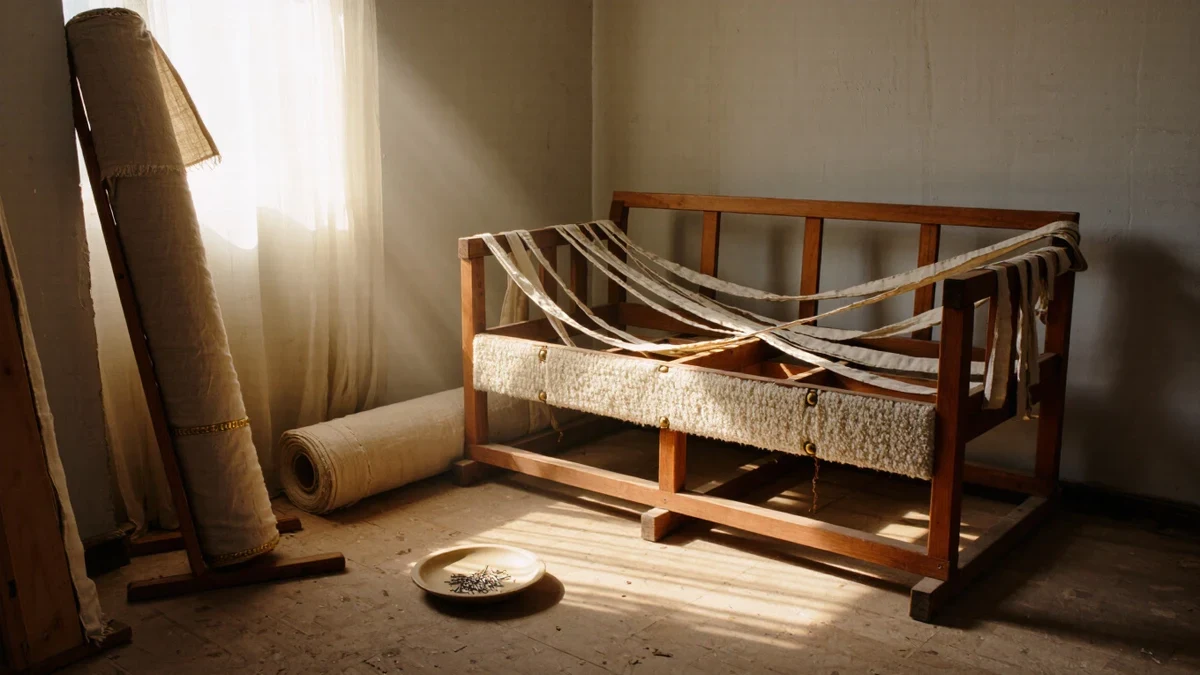
- Remove the old fabric layer by layer with a staple remover and needle-nose pliers, keeping notes and pieces in order.
- Inspect the frame, webbing and padding; replace worn foam or polyfill rather than recovering over collapse.
- Lay each old piece on the new upholstery fabric as a template, cut with fabric scissors, and allow seam allowances.
- Recover the couch in reverse order of removal, stretching and stapling from centres outward, smoothing wrinkles as you go.
- Sew cushion covers and reattach them, refasten any corded trim, and touch up exposed wood legs if needed.
The tool list is modest — staple gun, staple remover, pliers, fabric scissors, sewing machine, tape measure and a camera — but the guide's dust mask and gloves are a hint that stripping decades of old fabric is the least glamorous half of the job. Budget honestly, too: the guide warns that the final cost varies with how the couch is designed, how the current upholstery is attached, and the fabric chosen — which is how the same project lands anywhere between $150 and $1,200. A notebook and pen make the guide's tool list for a reason; every layer removed should be sketched or photographed before the next staple comes out, because the reassembly happens weeks later, in reverse, from memory.
How do you choose the fabric?
Start with the tag, not the swatch book. Upholstery carries a cleaning code, as fabric-care guidance from Loom & Fiber explains: W allows water-based cleaners, S means solvent only, W/S permits either, and X means vacuuming only with professional cleaning recommended. A household with children or animals skews toward W-coded, tightly woven, textured weaves — bouclé and similar looped fabrics forgive daily life precisely because their texture hides wear, though their loops need blotting rather than scrubbing. Always test any cleaner on a hidden patch first, whatever the code says.
What do the tools and the budget look like?
The published numbers keep expectations honest. Bob Vila's project overview puts working time at five to ten hours, total time at one to three days, skill level at expert, and estimated cost at $150 to $1,200 — the enormous range being the fabric. A meter of bouclé and a meter of linen-blend upholstery cloth do not cost alike, and a three-seater swallows yards of whatever is chosen. The guide's materials list sketches the rest of the budget: polyfill for renewing cushions, corded trim, zippers for cushion covers, wood stain for touching up legs, and a drop cloth to catch the decades of dust the stripping stage releases.
| Item | Documented detail |
|---|---|
| Working time | 5 to 10 hours (Bob Vila) |
| Total time | 1 to 3 days (Bob Vila) |
| Skill level | Expert (Bob Vila) |
| Estimated cost | $150 to $1,200, mostly fabric (Bob Vila) |
| Core tools | Staple gun, staple remover, pliers, fabric scissors, sewing machine (Bob Vila) |
Photography costs nothing and saves the project. The guide's very first instruction — photograph everything before dismantling — is the one step no guide lets a beginner skip, because the old cover is simultaneously the pattern, the order of operations and the yardage estimate for its replacement.
When should a professional take over?
When the frame is loose, springs need retying, the piece is an antique of uncertain value, or the design involves deep buttoning and pattern matching beyond a weekend's patience — a trained upholsterer earns the fee on those. Reupholstery of a sound, simply-built couch, though, remains one of the most satisfying trades a patient beginner can borrow: photograph everything, staple slowly, and the sofa gets a second decade.