Tile and grout care comes down to matching the cleaner to the surface, and Marazzi USA, the tile manufacturer, publishes the short version: "most glazed porcelain and ceramic tiles can be cleaned with water or a pH-neutral liquid cleaner," per its tile and grout cleaning tips. Everything below is non-structural surface care only.
What Does Marazzi Recommend for Routine Cleaning?
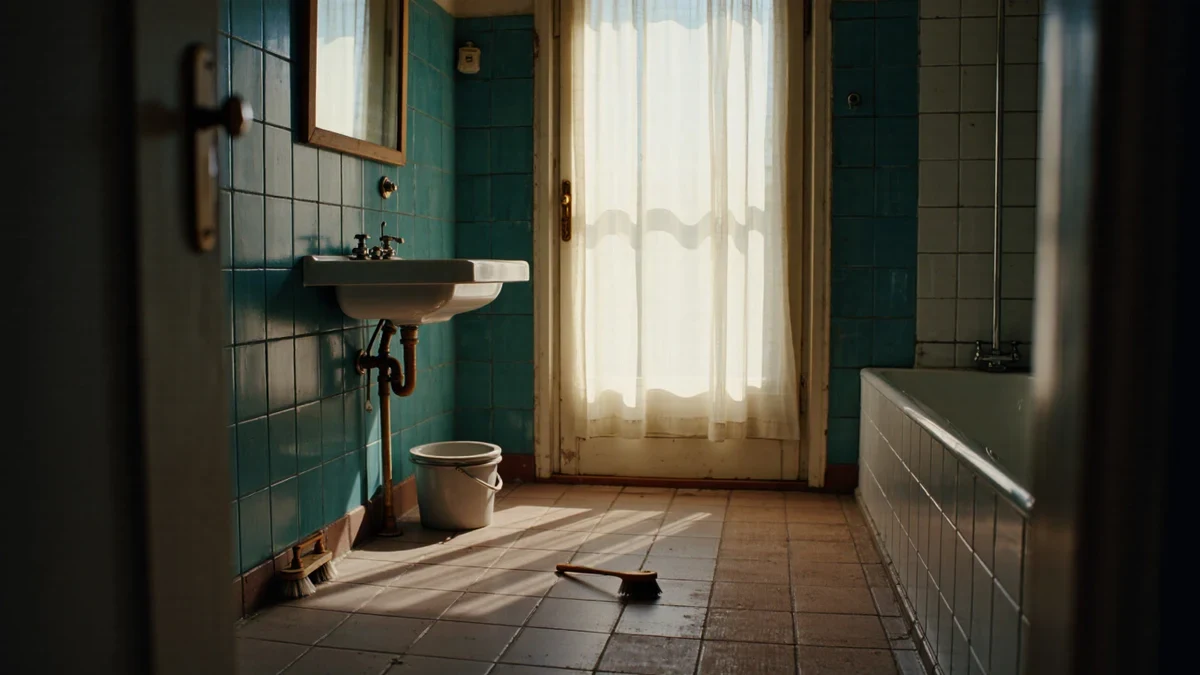
The manufacturer's care and maintenance page keeps the routine deliberately dull. "Glazed tile products should be cleaned routinely with an all-purpose, low VOC, household or commercial cleaner," it advises, applied with modest tools: "A cotton mop, cloth, sponge, or non-metallic brush should be used to apply and agitate cleaner." The point of the soft tool list is the glaze itself — a fired glass surface that rewards gentleness.
What not to use is stated just as firmly. "Routine cleaners should never contain harsh chemicals as these can damage tile. Acids can damage grout and the glazed surface of the tile." That single sentence covers most of the damage a well-meaning homeowner can do: vinegar tricks and acidic descalers belong nowhere near glazed tile or grout lines.
Unglazed tile gets its own line. "Unglazed tile should be cleaned routinely with concentrated tile cleaners with a neutral pH for safe regular use," the guide reads — the porous, matte body of unglazed porcelain or quarry tile behaves differently from a glaze, and the neutral pH keeps it that way.
How Do You Care for Grout Without Damaging It?
Grout is the honest part of a tile installation: it is where use shows first. Marazzi's guidance has two halves. The first is preventive — "The grout should be sealed with a penetrating/impregnating sealer (often called grout sealers), which does not contain silicone." The second is habitual: "Grout needs to be cleaned on a periodic basis to remove any surface buildup."
A safe periodic routine, assembled from the manufacturer's instructions, takes minutes rather than a weekend:
- Sweep or vacuum the field so grit cannot be ground into the grout lines.
- Apply a pH-neutral liquid cleaner with a cotton mop, cloth, sponge or non-metallic brush — nothing metallic, nothing abrasive.
- Agitate gently along the grout lines, then rinse so no cleaning residue remains.
- For glazed wall tile and glass accents, wipe with a soft cloth and, for glass, a simple glass cleaner.
- If a grout line stays dark after cleaning, stop there: persistent staining or cracking is a job for a licensed tile contractor, not a stronger chemical.
How Do Different Tile Surfaces Compare for Care?
Because each surface has its own published rule, a comparison table is the fastest reference to keep on the cleaning shelf. Every entry traces back to Marazzi's own guides.
| Surface | Published recommendation | What to avoid |
|---|---|---|
| Glazed ceramic and porcelain | Water or a pH-neutral liquid cleaner; routine all-purpose low-VOC cleaner | Harsh chemicals; acids, which damage grout and glaze |
| Unglazed tile | Concentrated tile cleaners with a neutral pH, used regularly | Harsh chemicals; buildup from skipped routine cleaning |
| Glass tile | Simple glass cleaner and a soft cloth | Abrasive pads — "Abrasive cleaning materials can scratch tiles" |
| Grout | Penetrating/impregnating sealer without silicone; periodic cleaning | Acids; letting surface buildup sit |
When Should You Stop and Call a Professional?
The line between cleaning and repair is easy to see. Cleaning removes surface soil; it cannot re-grout a cracked line, re-bed a loose tile, or reseal a shower that has begun to leak — and none of that should be attempted from a magazine's instructions. Marazzi's own framing points the same way: the published guides cover routine maintenance of finished surfaces, and anything involving the installation itself belongs to a licensed tile contractor.
Backsplashes get one extra caution from the same pages: the gentlest product that works is the right one. The manufacturer recommends choosing grout cleaners "with low VOCs (volatile organic compounds)" to keep harmful chemicals out of the home — advice that matters most in a kitchen, where the surface being cleaned sits beside food. Paired with a neutral-pH cleaner, a soft cloth and a periodic schedule, that is the whole system: mild products, correct tools, and the discipline to stop at the grout line where repair begins.
What About Backsplashes and Kitchen Zones?
Backsplashes live closest to the food, and the manufacturer's guidance tightens accordingly. Marazzi recommends choosing grout cleaners "with low VOCs (volatile organic compounds) to avoid harmful chemicals in the home" — advice that matters most on a wall two feet from a cutting board. The same page's warning that "Routine cleaners should never contain harsh chemicals" is the reason to skip the degreaser aisle entirely; a pH-neutral liquid cleaner handles cooking splatter on glazed tile without leaving anything behind.
Glass accents, common in backsplash layouts, follow their own one-line rule: a simple glass cleaner and a soft cloth. And because a backsplash is vertical, gravity changes the work — spray the cloth rather than the wall, work from the bottom up so streaks do not dry over clean areas, and keep the grout lines in the routine rather than treating them as a separate project.
Frequency, in the manufacturer's language, is qualitative rather than calendrical: glazed tile is cleaned "routinely," grout "on a periodic basis to remove any surface buildup." Translated into a household, that means the routine wipe happens when the cooking happens, and the grout pass happens when the wipe stops bringing the lines back to their sealed color. A sealer, per the guide, is "a penetrating/impregnating sealer (often called grout sealers), which does not contain silicone" — and resealing is maintenance a homeowner can do, following the sealer manufacturer's own published instructions.
What Mistakes Do the Guides Implicitly Warn Against?
Read together, the two Marazzi pages sketch a small gallery of avoidable errors. Steel wool and abrasive pads top the list — "Abrasive cleaning materials can scratch tiles," the tips article warns, and a scratched glaze cannot be unscratched. Acidic cleaners come second: "Acids can damage grout and the glazed surface of the tile," the care page states flatly. Skipping the rinse comes third, because detergent residue left in a grout line collects soil faster than a clean surface ever would.
The fourth mistake is subtler: treating all tile as one material. The guides separate glazed, unglazed and glass precisely because their finishes differ — a routine all-purpose low-VOC cleaner suits a glaze, concentrated neutral-pH cleaners suit unglazed bodies, and glass wants its own cloth. A household that keeps one product and one pad for everything will, eventually, be a household with a dulled backsplash.