A room paints best in a fixed order — prepare, repair, prime, then work from ceiling down to trim — and the fastest route is documented: Bob Vila's nine-step method budgets two to eight working hours and $50 to $175 in materials for a beginner, while Architectural Digest's March 2026 guide tracks the low-VOC paints designers now specify first.
What order do you paint a room in?
Work top-down, one surface at a time, so drips never land on a finished face. Following Bob Vila's published nine-step method, the sequence runs roughly as follows.
- Clear the room and ventilate: open a window and door for cross-ventilation before anything else.
- Repair and clean the walls, filling holes with lightweight spackling compound.
- Sand patched areas smooth and wipe away dust with a lint-free cloth.
- Prime repaired or stained areas with a stain-blocking primer.
- Paint the ceiling first, using an extension pole for even reach.
- Cut in edges and corners with a quality brush.
- Roll the walls in overlapping sections before edges dry.
- Apply the second coat as needed for full coverage.
- Remove painter's tape and reinstall switch plates once surfaces are dry.
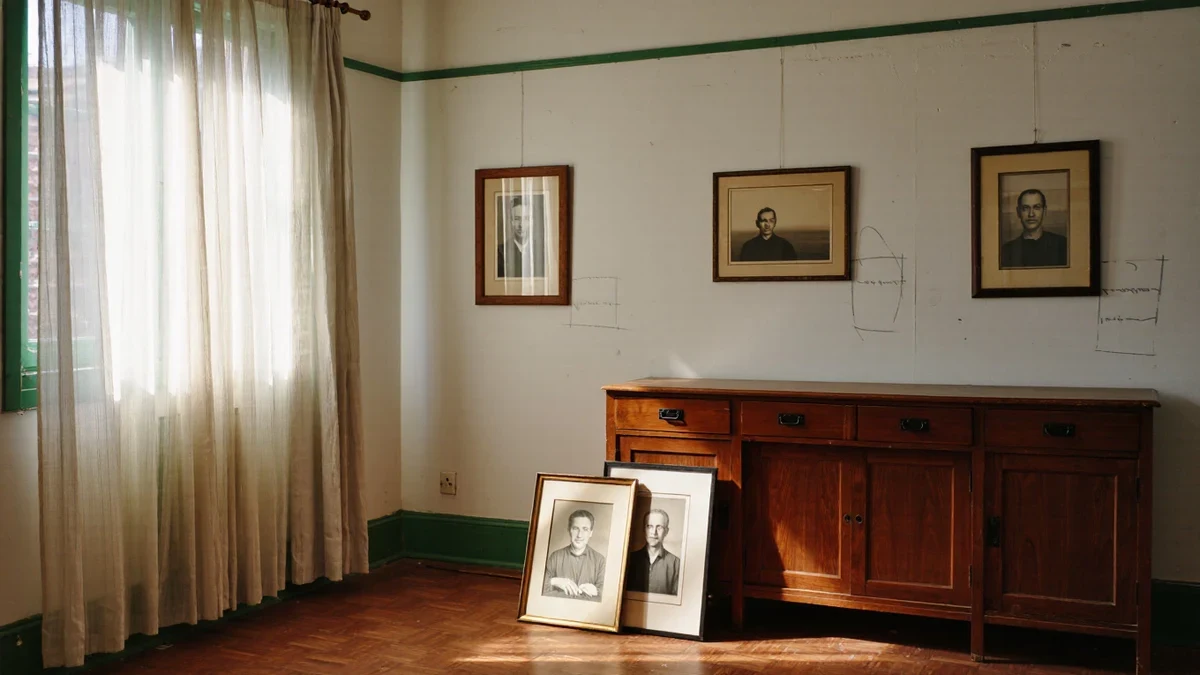
The guide's project overview puts working time at two to eight hours, total time at one to three days, and estimated cost at $50 to $175 — a realistic weekend for one modest room. Its first step is more thorough than most painters expect: clear the room of all furniture and decorations, including curtains, wall art, light fixtures and outlet covers, so nothing later has to be painted around. Priming is reserved for where it earns its keep — repaired patches and stains — with a stain-blocking primer doing the quiet work of keeping old marks from ghosting through the new color.
How do you ventilate and prep safely?
Ventilation is step one for a reason. Bob Vila's guide advises opening a window and door for cross-ventilation and notes that even low-VOC paints contain chemicals that evaporate into the air and can cause health issues with long exposure; where a room has no window, it recommends a mask and running an air purifier during and after painting. Drop cloths, a putty knife and painter's tape round out the kit, and the tape itself is optional in the guide's materials list — a steady brush can replace it.
Which paints do designers specify now?
The choice of can matters as much as the order of strokes. In Architectural Digest's guide to nontoxic paint, published 19 March 2026, Alicia Storie of Edinburgh studio AdesignStorie explains that low-VOC paints reduce fumes while drying, while zero-VOC paints focus on safe ingredients in the long term. The guide splits the category in two: bio-based paints made from renewable materials like casein, clay and plant resins, and mineral paints — chalky, breathable, often virtually VOC-free.
The named recommendations are specific. Jonsara Ruth, cofounder of the Parsons Healthy Materials Lab, recommends Sweden's Ottoson Paint, Rubio Monocoat stains and England's Brouns & Co, whose paints are made of linseed oil; AD100 designer Jamie Drake points to Alkemis Paint's mineral range, and a Rome living room by Axel Vervoordt illustrates Domingue mineral paints in situ.
How much paint, time and money should you plan?
The published numbers are reassuringly modest. Bob Vila's project overview sets working time at two to eight hours, total time at one to three days including drying, skill level at beginner and estimated cost at $50 to $175 for a standard room — the spread reflecting room size and paint grade more than difficulty. The tool list is short: quality paint, brushes and roller covers, a paint tray, drop cloths, a putty knife and lightweight spackling compound, a lint-free cloth, a painter's multi-tool, a step ladder and an extension pole for ceilings. Primer earns its place as stain-blocking insurance rather than a mandatory coat on every wall.
The timeline is where beginners stumble, not the brushwork. Two coats with proper drying between them is the default the guide works to, and washing rollers and brushes immediately is the difference between a second day that flows and one spent shopping again. Ventilation continues after the final coat: Architectural Digest's reporting notes that even after the telltale odor of new paint vanishes, traditional paint can off-gas for months — one reason its designer sources lean to mineral and bio-based formulas for bedrooms and nurseries in particular.
When should a painter sit one out?
Not all surfaces are a DIY proposition. Any work that reaches into structure or wiring — removing radiators, relocating outlets, disturbing suspected lead paint in an older home — belongs with licensed professionals in those trades, and their published guidance governs. For everything else, the nine steps above, two quiet days and a good brush will carry a room from prep to second coat without a headache.